Tag Archives: science

The Dethroning of Modern Science: Part 2

newtons-rainbow

As promised in my last post, this is my stab at what we might call the “distinctives” of a classical and Christ-centered approach to the teaching of science.  These are still lofty, theoretical ideals, and the fleshing out of them in the classroom is where things should prove interesting.  I will share with more detail some of my attempts at forming actual lessons around some of these ideals in a future post.  But, for now, let’s live in the clouds . . .

A classical, Christ-centered approach to teaching science:

1) Rejects many of the philosophies which are fundamental to the pursuit of modern science in the secular arena.  I will not attempt to list all of them nor will I define any of them here, but this list should include a) scientism, b) positivism, c) naturalism (both ontological and methodological), d) reductionism, and e) pragmatism.

2) Embraces the tension between the immanence of creation and its dependence on a transcendent Creator–what Jamie Smith refers to as a “participatory ontology.”

3) Embraces a charitable rather than coercive disposition towards creation; the exercise of responsible dominion looks more like cultivation of creation than control of creation.

4) Examines closely the philosophical and theological implications of scientific thought, and situates the milestones of scientific development within their corresponding philosophical and theological milieu.  In other words, teaches science as if it was done by real people who lived in real time and space.

5) Seeks to redeem the coherence between science and Christianity, noting the vital role that Christian thought played in the scientific revolution of the 17th and 18th centuries and can play now within the ever-unfolding mysteries of the quantum world.

6) Considers theories of cosmogony and ontology through a lens of both general (the “scientific” evidence) and special (God’s ontological truths as revealed through Scripture) revelation.

7) Embraces a radical and humble epistemology–we must answer the question: what are the limits on what scientific investigation can tell us about the world?

8) Embraces a normed approach to scientific study: more important than the question of can we do something is the question of ought we to do something.

9) Affirms the study of creation as a form of worship, and accordingly situates scientific exploration and instruction within doxological bookends.

It annoys me that I could not come up with one more point to round out my list at ten items, so feel free to add #10 in the comments if you have a good suggestion.

The Dethroning of Modern Science (Part 1)

birdinairpump

“Where knowledge grows without wisdom and without reverence, it threatens both our humanity and our world.  Yet modern man suppresses his natural desire to throw himself in the path of science and ask his baffling normative questions (baffling to science, but not insignificant to man).  Scientific technology, acting like an opiate, calms his normative inquisitiveness with the hype of its gadgetry’s comfort and security and with the fusion-promise of technological answers to all foreseeable problems.  This opiate, like all opiates, destroy’s man’s critical faculties and makes him blind to the fact that the technological ‘fix’ hides its evil consequences by taking a position of moral aloofness while ‘pushing’ the practical value of its narcotic.  Science must be pulled down from its nonnormative pedestal.  The penetrating intensity of its analysis must be used to expose the narcotic effects of technological advancement on man and on his inquisitiveness.”  – David Hicks, Norms and Nobility

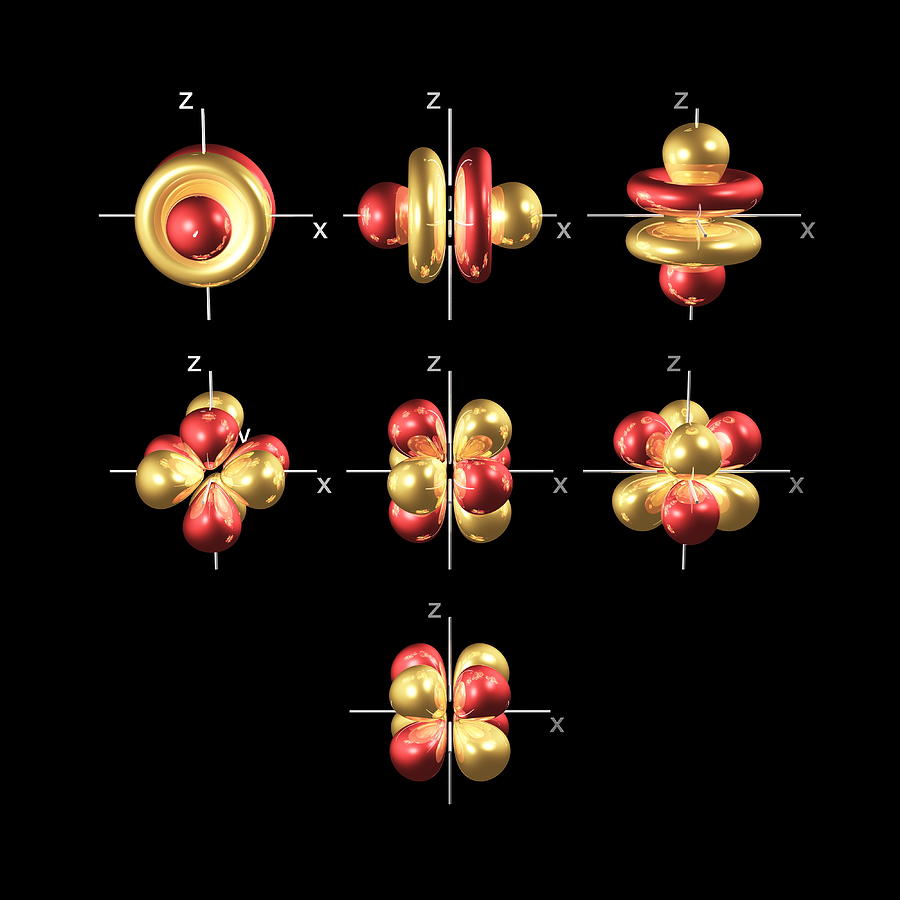
I teach middle school science at a classical Christian school.  I used to think this meant that I teach science the way it was taught to me, except I ratchet up the rigor a few notches and make sure to mention the Intelligent Designer whenever we encounter something in nature that is precisely ordered or astoundingly beautiful.  I still believe very sincerely in at least that second part–in fact, just this past week my 8th grade students and I were wondering at some of the complex three-dimensional symmetries of the electron orbital geometries.

But the longer I am a teacher of science in a classical Christian setting, the more I realize that one of my most important responsibilities is to continually put science in its appropriate place.  In Postman’s words, I have to “break the spell.”  Hicks would probably say I have to smash the opiate vile against the floor.  Repeatedly.

I will not take space here to make the case for what I believe is pretty self-evident: the ubiquitous and uncritical adoption of new technology and its promises in our Western culture (Christian education not being exempt from the spell). Hicks and Postman wrote about our surrender to technology before the Internet and the iPhone became demigods (Hicks’ Norms and Nobility was published in 1981, and Postman’s Technopoly was published in 1993).

When it comes to new technology, the mentality is: “if it can be done, it will be done.” The skeptical outcries of the Luddites are invalidated by references to “extensive research,” “increased efficiency,” or “decreased cost.” The normative questions—Should we adopt this new technology? At what cost to our humanness are we adopting this new technology? Is this new technology good for our soul?—will only be asked if science remains subservient to a normative sniff test.

But the aroma of new technology—and, as Hicks says, its narcotic effect—is overpowering and growing increasingly irresistible, despite our best intentions.  Just like Edmund unwittingly dropped his guard with the White Witch, we are inclined to do the same; before we have even realized it, we have become enslaved by the promise of more Turkish Delight.

N.T. Wright has said that “precisely because Christianity means freedom, it’s important that nothing is allowed to give me orders: not my appetites, not my habits, not the surrounding atmosphere of my culture” (1 Corinthians for Everyone). As the STEM push in our country cultivates the taste for Turkish Delight in our youth, teachers of science in classical Christian schools must fight to maintain the study of science as a liberating art. This means that we must design our curriculum and teaching methodologies in such a way that we are constantly “pulling science down from its nonnormative pedestal.”

Hicks summarizes by saying that “a resolution of values must attend the study of science, and analysis must be framed within the normative inquiry if science is to serve life, not destroy it.” I would go on to say that we must accomplish this normative approach while simultaneously affirming the goodness of God’s creation as well as our mandate to exercise wise dominion over this creation.

What does this radical approach to science instruction look like in practice? As I continue to wrestle with this question in my own classroom, I have started making a list of what might constitute a “classical, Christ-centered approach” to science education. In my next post I will outline some of these thoughts.

Natural Philosophy

boyleairpump

“For the wise men of old the cardinal problem had been how to conform the soul to reality, and the solution had been knowledge, self-discipline, and virtue. For magic and applied science alike the problem is how to subdue reality to the wishes of men: the solution is a technique; and both, in the practice of this technique, are ready to do things hitherto regarded as disgusting and impious.”    – C.S. Lewis, The Abolition of Man

I am at the Society for Classical Learning’s Alcuin retreat up in Grand Rapids, MI this week where the topic is “science and theology.”  Pre-meeting conversations and readings have already been such an inspiration.  I’m hoping to learn how better to, in the words of one of my fellow colleagues here, “move from teaching students to be scientists–technicians of science–to being natural philosophers: those who seek wisdom in the natural order of Creation.”

More to come . . .

Let it Snow: Science as Bible Class

snowflake_forblogheader

In light of the recent snowy weather in Atlanta, I put together the following slideshow of snowflake images using the stunning macro-photographs from a brilliant Russian photographer, Alexey Kljatov.  (Mr. Kljatov has kindly made his photographs available to the public as long as we credit him, so please go enjoy more of his work here.  You will be blessed.)

There are plenty of technically complex (and, perhaps, more pragmatic) things we could talk about when it comes to snow–a proper exploration of the intricate phase diagram for ice crystals alone is enough to fill at least a week of class time.  But sometimes it is a good thing to remind students in a classical Christian school the primary reason we study science: not so we can go do something, but so we can better know Someone.  So I presented the following slideshow to my 6th and 8th grade science students, then asked them to write a one-paragraph response.

If you can spare the time, please take five minutes, remove yourself from distractions, quiet your soul, and watch this.  Then read some of my students’ responses below the video.

Two of my students actually had tears in their eyes at the conclusion of the slide show–does the beauty of God’s creation still move us so?

Here are some excerpts from the student responses:

“In every piece of snow God has made a masterpiece, with shapes, varying in size, depth, and design.  It shows me that God really will take care of us, because if He puts that much detail into little snowflakes, He definitely put that much detail into us.”

“The snowflakes show how precise and perfect God is.”

“Since the snowflakes are so beautiful I can’t imagine how heaven will be.”

“Just like how God has made every snowflake different, He has also made every person different.”

“The detail God has put into all of these snowflakes makes me want to know more about the wonderful things He can do.”

“If God makes something as small and unimportant as a snowflake so beautiful and complex, how much care must He put into creating us?  If he makes billions of snowflakes every second of every day and each one is beautiful and unique in its own way, how important am I in God’s eyes?”

“To see the microscopic detail in a snowflake reminded me that I am fearfully and wonderfully made.”

“I realized that the things we take for granted are the greatest things in life.”

“The snowflakes are not much different from us.  We both have the same purpose: to glorify God.”

“I noticed that most were still symmetrical, but some had begun to melt.  It was as if they were created in perfection, but as they began to be influenced by the heat close to the Earth they began to melt and lose that perfection.”

— – — – —

That last statement really stuck with me.  This student was referring to the snowflake pictured at the top of this post.

We are all snowflakes.  Not only are we “fearfully and wonderfully made,” but we still bear that image of God’s perfection, though the melting power of sin has caused us to lose true symmetry with God.

But you can still look at a snowflake that has partially melted and imagine what it must have looked like in its perfect state.

When we look at our students, do we focus on their melted edges, or do we imagine what they must look like to God once Jesus has purified them and made them, well, whiter than snow?

As C.S. Lewis once said, “There are no ordinary people.  You have never talked to a mere mortal.”

Nor do we teach them.