“The ultimate lesson silence has to teach is that God and the world have not absented themselves from us–we have absented ourselves from them.”
– Parker Palmer, To Know as We are Known: Education as a Spiritual Journey
“The ultimate lesson silence has to teach is that God and the world have not absented themselves from us–we have absented ourselves from them.”
– Parker Palmer, To Know as We are Known: Education as a Spiritual Journey
We make the worst mistake in Christian education when we forget that Truth is a Person.
If we teach our students to learn from a purely objective point of view, to hold Truth (“knowledge”) at a distance, to study it in order to master it so that they can use it to get what they want out of life (good grades, good college, good job, good car, good retirement), then why do we act surprised when our students regard Jesus in the same transactional, utilitarian manner?
If our aim is to inform rather than to transform, we will graduate moralists rather than Kingdom bearers, prisoners rather than free men.
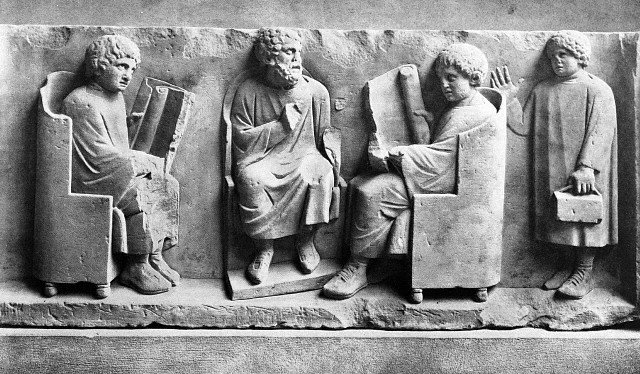
“It is no surprise that our dominant images of teaching and learning are individualistic and competitive rather than communal; they are derived from images of reality and of knowing that bear these same marks. If reality consists of atoms in the void or individuals in competition, and if knowing consists of gathering discrete data about objects, then teaching and learning will mean delivering data to students who must compete for those scarce rewards called grades. But what scholars now say–and what good teachers have always known–is that real learning does not happen until students are brought into relationship with the teacher, with each other, and with the subject. We cannot learn deeply and well until a community of learning is created in the classroom.”
– Parker Palmer, To Know as We Are Known: Education as a Spiritual Journey

Continuing from my previous post . . .
My whole approach to education as a student all the way through graduate school (and, if I’m honest, the first few years of my teaching career) was to collect (disperse) knowledge so that I (my students) could “coerce the world into meeting my (their) needs.”
As it turned out, I lacked a deep understanding of what my needs really were, “to known as I am known.” This uncharitable pursuit of knowledge eventually led to the death of my spirit. Mercifully, God saw fit to redeem me from that pit, but I would prefer that my students not require that type of epistemological journey to land them back on the path of flourishing that God intends for them.
But this brings up the question of how much of my students’ path toward flourishing is really up to me (and I ask the same thing for my own two children). In my feeble attempts to teach them how to love and to know lovingly, I often tend to rely too much on my own efforts and influence. In other words, I’m just trying to control another outcome.
It is at this point that my faith in God’s providence for my students must provide a hope that surpasses what I can muster by my own efforts.
And, ultimately, it is at this point that I need to stop “conveying knowledge” and start loving.
“Knowledge puffs up, but love builds up. Anyone who claims to know something does not yet have the necessary knowledge; but anyone who loves God is known by him.”
– 1 Corinthians 8: 1b-3
In his book To Know as We are Known, Education as a Spiritual Journey, Parker Palmer takes some time in his first chapters to discuss the (d)evolution of the image and purpose of knowledge. To paraphrase, Palmer posits that in premodern times, knowledge was approached lovingly, reverently, and for the purposes of drawing the knower into a deeper communion with the known, that “hidden wholeness” of creation that Merton speaks about. Modern images of knowledge, however, suggest that we value knowledge only to the extent that it allows the knower to control, to manipulate, and to lay claim on the known. In other words, “we value knowledge that allows us to coerce the world into meeting our needs–no matter how much violence we must do.” Palmer cites the invention of the first atom bomb as an extreme example of this “violence.”
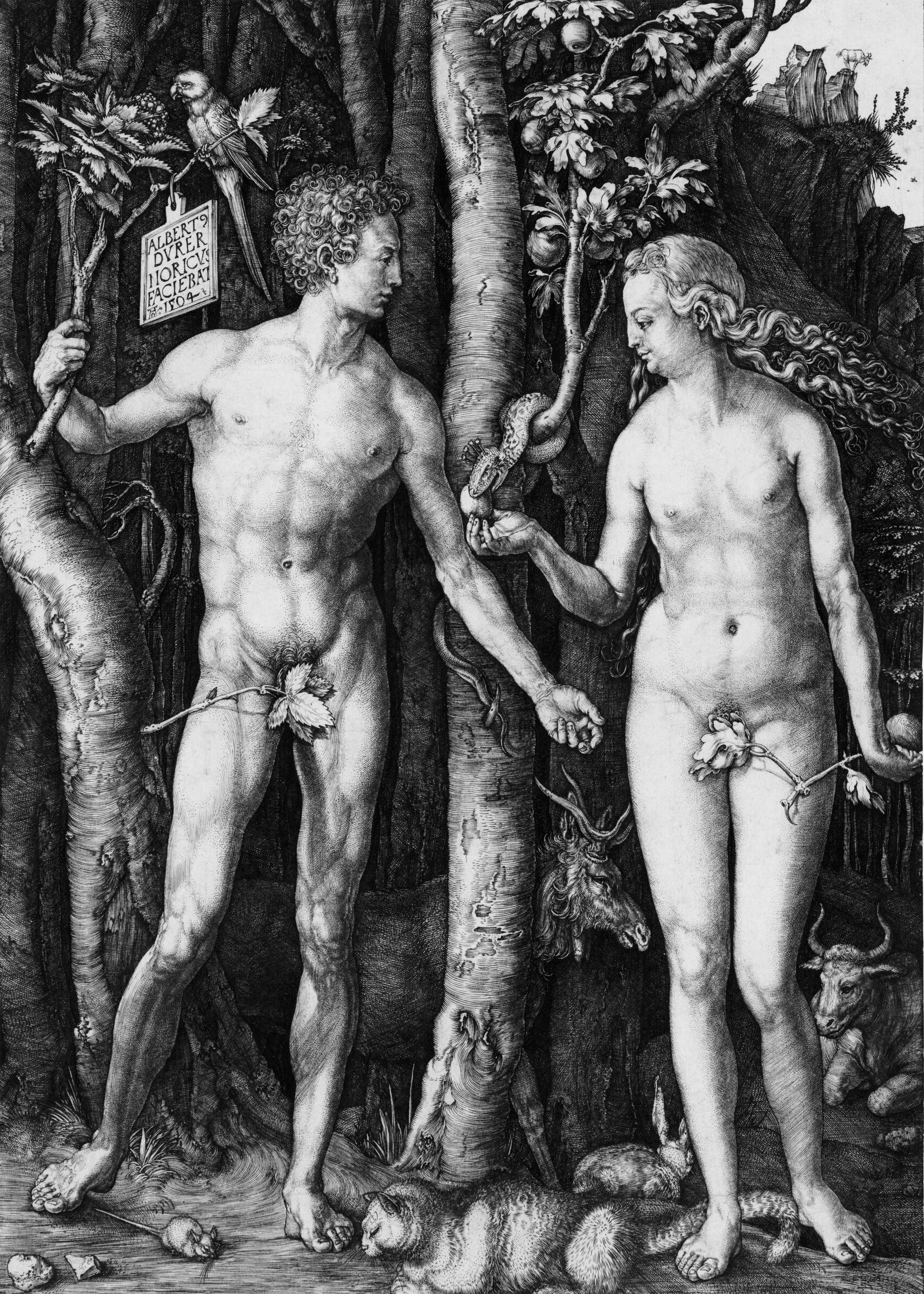
Palmer then connects this denatured image of knowledge to the story of Adam and Eve:
“In the language of religious tradition, Adam and Eve committed the first sin. In the language of intellectual tradition, they made the first epistemological error. [. . . ] The sin, the error, is not our hunger for knowledge [. . . , rather] Adam and Eve were driven from the garden because of the kind of knowledge they reached for–a knowledge that distrusted and excluded God. Their desire to know arose not from love but from curiosity and control, from the desire to possess powers belonging to God alone. They failed to honor the fact that God knew them first, knew them in their limits as well as their potentials. In their refusal to know as they were known, they reached for a kind of knowledge that always leads to death.”
I was immediately convicted by this discussion. As the teacher, “the mediator between the knower and the known, the living link in the epistemological chain,” I repeat this original sin in my classroom whenever I present knowledge as something to “master” or “possess” or “control” rather than something to love for the sake of bringing my students into closer communion with the Lover.
Even in classical Christian education, we talk about “teaching for mastery” and “mastery learning.” I tell my students every day that they need to “master” this or that. Sure, I also explicitly lead them in discussions and exercises for the express purpose of cultivating in them a love for math and God’s creation as explored through the sciences, but at the end of the day they are assessed and evaluated (“told their value”) based on what concepts and skills they have mastered. Is there something out of joint here?
Perhaps instead of telling students that I expect them to master the factoring of polynomials, I should say that I expect them to enter a state of loving communion with polynomials. This sounds kind of ridiculous, but is it not what Palmer is getting at? Palmer, Jamie Smith, and a host of others – not to mention our own experience in the classroom, whether as teachers or students – tell us that students are significantly formed by the “hidden curriculum” in our schools as much if not more as by what we explicitly teach. If this is indeed the case, then the words we choose to describe the “act of knowing” should really matter.
 Pi Alpha