Many students “don’t like” math because they “can’t do” math. Many students “can’t do” math because math has only ever been presented to them as something “to do.” Rarely is math presented as something “to understand,” even less often something “to contemplate,” and hardly ever something “to love.”
Why is that? We know why. Math is the lowest hanging fruit (science is a close second) for the “practical” utilitarian agendas of modern education reformers nationwide.
Math tutors everywhere make money hand over foot showing kids how to use shortcuts so that they can “do math.” “Don’t worry about understanding this concept, just learn the trick!” Besides, parents aren’t going to pay a tutor to help their child love math; the expected return on their investment is quite simply a solid “A” in the class.
Or a high score on the SAT (don’t get me started).
So we’re left with students (and I was one of them!) who can find the area of a circle, but can tell you nothing about Pi except that it can be approximated as 3.14.
Big deal, you say. Does a carpenter need to understand the elegant beauty of the design of a screw if he can use screws effectively and efficiently to build a beautiful house?
Maybe not.
But if we decide that math is for doing, not for knowing (much less for loving), then we are withholding beauty and truth (and, in my opinion, a piece of God’s glory) from our students. In other words, we’re cursing them. And math class will end up being a complete waste of time for all the students who don’t become engineers or accountants.
But no, you say. For those non-accountants and non-engineers math still teaches them to think logically! True. But if that’s the only use of math for those students, we might as well let them drop math and add more Latin classes. Oh wait; we can’t do that, can we? I forgot about those darned SATs!!
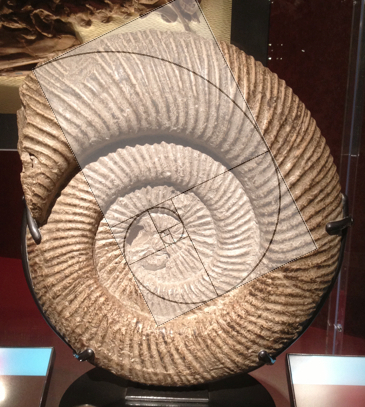
I have some students who can “do math” better than others. That will always be a reality. But you know what else I’ve discovered? When I walk my students through the exercise of creating the spiral of a nautilus shell by starting with the Fibonacci Sequence, the biggest smiles of pure delight (without fail, almost every time) appear on the faces of those students who are not as good at “doing math.”
I find this fascinating, if not sad (for those students who would rather get back to the business of doing math).
The ability to do math is a useful skill that will prepare our students for the marketplace. The ability to know and love the divine beauty in math will further conform our students into God’s image.
My encouragement to math teachers (myself included!): Make math a conversation (it is a language, after all). Insist on understanding, on knowing. Invite contemplation. Reveal beauty. Model curiosity and wonder. Then, and only then, do math.
You may end up covering less, but you will uncover even more.


 Pi Alpha