Tag Archives: epistemology

The Dethroning of Modern Science: Part 2

newtons-rainbow

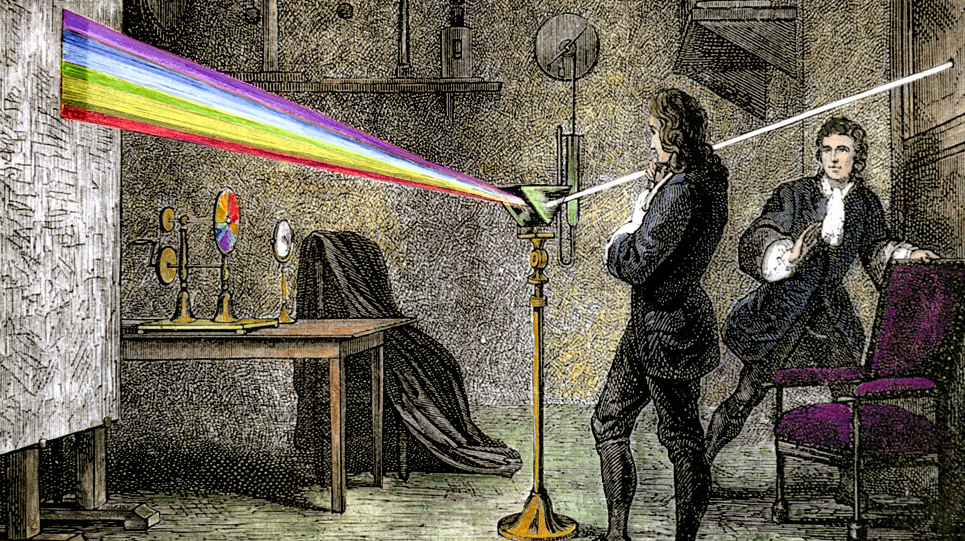
As promised in my last post, this is my stab at what we might call the “distinctives” of a classical and Christ-centered approach to the teaching of science.  These are still lofty, theoretical ideals, and the fleshing out of them in the classroom is where things should prove interesting.  I will share with more detail some of my attempts at forming actual lessons around some of these ideals in a future post.  But, for now, let’s live in the clouds . . .

A classical, Christ-centered approach to teaching science:

1) Rejects many of the philosophies which are fundamental to the pursuit of modern science in the secular arena.  I will not attempt to list all of them nor will I define any of them here, but this list should include a) scientism, b) positivism, c) naturalism (both ontological and methodological), d) reductionism, and e) pragmatism.

2) Embraces the tension between the immanence of creation and its dependence on a transcendent Creator–what Jamie Smith refers to as a “participatory ontology.”

3) Embraces a charitable rather than coercive disposition towards creation; the exercise of responsible dominion looks more like cultivation of creation than control of creation.

4) Examines closely the philosophical and theological implications of scientific thought, and situates the milestones of scientific development within their corresponding philosophical and theological milieu.  In other words, teaches science as if it was done by real people who lived in real time and space.

5) Seeks to redeem the coherence between science and Christianity, noting the vital role that Christian thought played in the scientific revolution of the 17th and 18th centuries and can play now within the ever-unfolding mysteries of the quantum world.

6) Considers theories of cosmogony and ontology through a lens of both general (the “scientific” evidence) and special (God’s ontological truths as revealed through Scripture) revelation.

7) Embraces a radical and humble epistemology–we must answer the question: what are the limits on what scientific investigation can tell us about the world?

8) Embraces a normed approach to scientific study: more important than the question of can we do something is the question of ought we to do something.

9) Affirms the study of creation as a form of worship, and accordingly situates scientific exploration and instruction within doxological bookends.

It annoys me that I could not come up with one more point to round out my list at ten items, so feel free to add #10 in the comments if you have a good suggestion.

“Knowing is Loving”: Part 2

knowledgepuffeth

Continuing from my previous post . . .

My whole approach to education as a student all the way through graduate school (and, if I’m honest, the first few years of my teaching career) was to collect (disperse) knowledge so that I (my students) could “coerce the world into meeting my (their) needs.”

As it turned out, I lacked a deep understanding of what my needs really were, “to known as I am known.”  This uncharitable pursuit of knowledge eventually led to the death of my spirit.  Mercifully, God saw fit to redeem me from that pit, but I would prefer that my students not require that type of epistemological journey to land them back on the path of flourishing that God intends for them.

But this brings up the question of how much of my students’ path toward flourishing is really up to me (and I ask the same thing for my own two children).  In my feeble attempts to teach them how to love and to know lovingly, I often tend to rely too much on my own efforts and influence.  In other words, I’m just trying to control another outcome.

It is at this point that my faith in God’s providence for my students must provide a hope that surpasses what I can muster by my own efforts.

And, ultimately, it is at this point that I need to stop “conveying knowledge” and start loving.

“Knowledge puffs up, but love builds up.  Anyone who claims to know something does not yet have the necessary knowledge; but anyone who loves God is known by him.”
– 1 Corinthians 8: 1b-3

“Knowing is Loving”: Part 1

adamandeve1

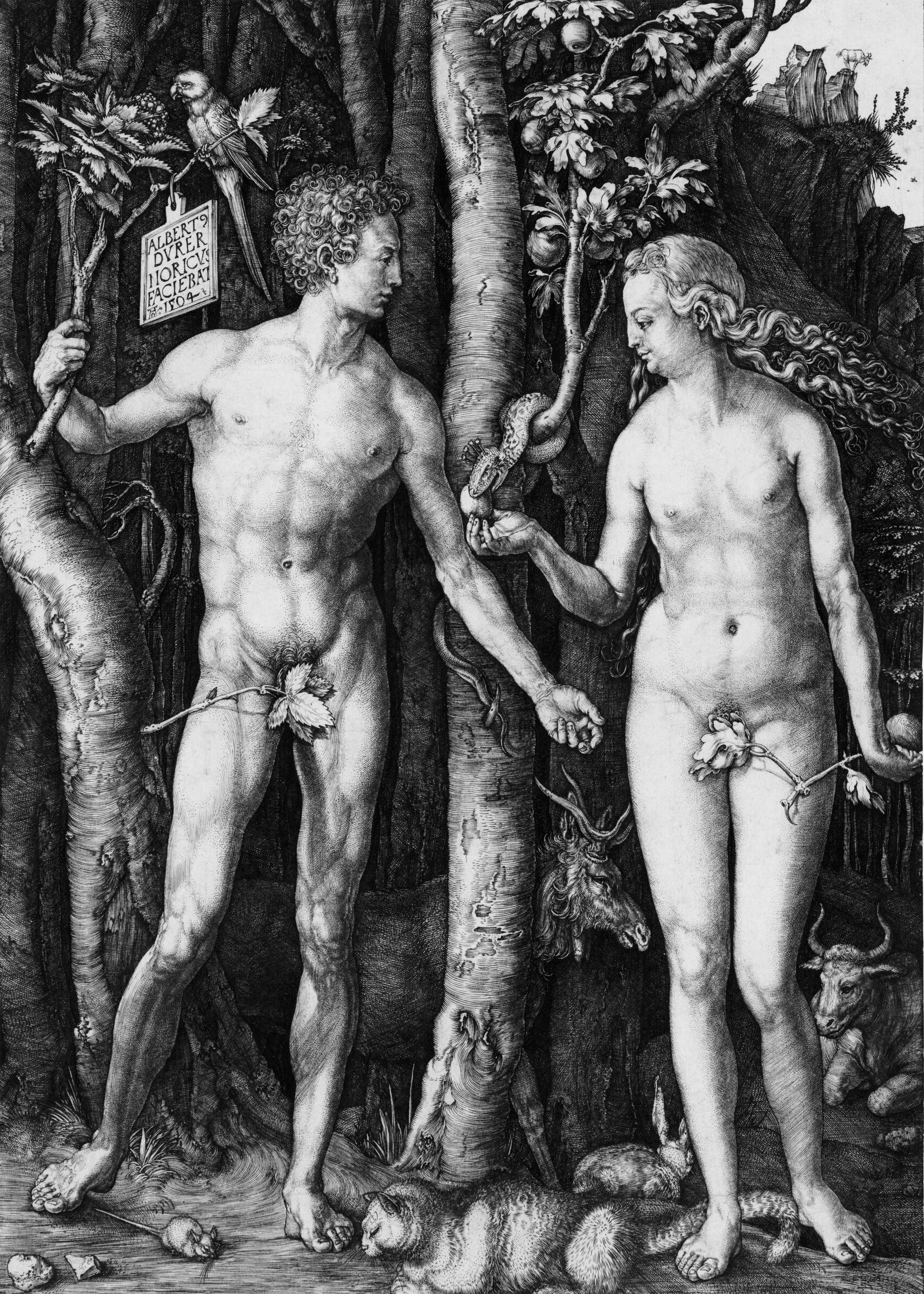
In his book To Know as We are Known, Education as a Spiritual Journey, Parker Palmer takes some time in his first chapters to discuss the (d)evolution of the image and purpose of knowledge.  To paraphrase, Palmer posits that in premodern times, knowledge was approached lovingly, reverently, and for the purposes of drawing the knower into a deeper communion with the known, that “hidden wholeness” of creation that Merton speaks about.  Modern images of knowledge, however, suggest that we value knowledge only to the extent that it allows the knower to control, to manipulate, and to lay claim on the known.  In other words, “we value knowledge that allows us to coerce the world into meeting our needs–no matter how much violence we must do.”  Palmer cites the invention of the first atom bomb as an extreme example of this “violence.”

Palmer then connects this denatured image of knowledge to the story of Adam and Eve:

“In the language of religious tradition, Adam and Eve committed the first sin.  In the language of intellectual tradition, they made the first epistemological error.  [. . . ] The sin, the error, is not our hunger for knowledge [. . . , rather] Adam and Eve were driven from the garden because of the kind of knowledge they reached for–a knowledge that distrusted and excluded God.  Their desire to know arose not from love but from curiosity and control, from the desire to possess powers belonging to God alone.  They failed to honor the fact that God knew them first, knew them in their limits as well as their potentials.  In their refusal to know as they were known, they reached for a kind of knowledge that always leads to death.”

I was immediately convicted by this discussion.  As the teacher, “the mediator between the knower and the known, the living link in the epistemological chain,” I repeat this original sin in my classroom whenever I present knowledge as something to “master” or “possess” or “control” rather than something to love for the sake of bringing my students into closer communion with the Lover.

Even in classical Christian education, we talk about “teaching for mastery” and “mastery learning.”  I tell my students every day that they need to “master” this or that.  Sure, I also explicitly lead them in discussions and exercises for the express purpose of cultivating in them a love for math and God’s creation as explored through the sciences, but at the end of the day they are assessed and evaluated (“told their value”) based on what concepts and skills they have mastered.  Is there something out of joint here?

Perhaps instead of telling students that I expect them to master the factoring of polynomials, I should say that I expect them to enter a state of loving communion with polynomials.  This sounds kind of ridiculous, but is it not what Palmer is getting at?  Palmer, Jamie Smith, and a host of others – not to mention our own experience in the classroom, whether as teachers or students – tell us that students are significantly formed by the “hidden curriculum”  in our schools as much if not more as by what we explicitly teach.  If this is indeed the case, then the words we choose to describe the “act of knowing” should really matter.