Tag Archives: Andrew Kern

Loving our Way to Truth

truthlove

It seems only fitting to start the new year off with a reminder of what matters and how it is that we might find it.  The following comes from one of Andrew Kern’s posts over on the Circe Institute site.

“For many, the quest to know the truth is a purely rational quest. Thus, for example, Rene Descartes’ resolution to begin by doubting everything – all that he was told, and everything he perceived with his senses. Only by reasoning could he come to know the truth. It’s easy to see why we would think this way. Truth is generally perceived as something we gain through intellectual endeavors. However, what is overlooked in this approach is the health and effectiveness of the truth seeking instrument. The mind interacts with and is largely controlled by the heart, soul, and spirit of the person. Therefore the most perfectly trained mind cannot find truth if the soul of the seeker is disordered. Consequently, and to the chagrin of some intellectuals, truth can only be gained by the soul that is actively loving his neighbor. If she is not doing so, then she is not healthy enough to perceive truth. Instead, she will reduce truth to something that fits within her self-determined parameters. Caritas, Agape, Charity is an infinite act. When a person begins to perform it he comes in contact with an infinite reality deep in his heart. He gains a faculty of perception for things eternal, just as he gains a faculty of perception for things geometrical when he contemplates the definitions and axioms of geometry and he gains a faculty of perception for things artistic when he contemplates and imitates works of art. Only the actively loving person can ever know the truth because the truth is love and is bound to love.”   – Andrew Kern

Wisdom from Above

wisdomfromabove

I was reading Andrew Kern’s latest blog post over on the Circe Institute site, and it prodded me to read and consider carefully again – or perhaps for the first time with intentionality and in the light of education – James 3:13-18:

“Who is wise and understanding among you? Show by your good life that your works are done with gentleness born of wisdom. But if you have bitter envy and selfish ambition in your hearts, do not be boastful and false to the truth. Such wisdom does not come down from above, but is earthly, unspiritual, devilish. For where there is envy and selfish ambition, there will also be disorder and wickedness of every kind. But the wisdom from above is first pure, then peaceable, gentle, willing to yield, full of mercy and good fruits, without a trace of partiality or hypocrisy. And a harvest of righteousness is sown in peace for those who make peace.”

We say in classical education that we aim to cultivate wisdom, but how often do we simply attribute this wisdom to good teaching, the “right” curriculum, or – in the worst case – the diligent efforts of our students?  Sure, we would never come out and name these things as the sources of wisdom, but don’t we act like that one teacher is irreplaceable, or that new curriculum will “fix” everything?

But that’s only the tip of the iceberg.

Let’s say that we do acknowledge that true Wisdom is “wisdom from above.”  James goes on to tell us that this kind of Wisdom is “first pure . . . ”

This is where Kern really gets me to thinking.  If “wisdom from above is first pure,” then the cultivation of this wisdom in us:

1) Requires repentance, and thus

2) Depends 100% on Jesus.

Kern is much more eloquent at expounding on this idea, so you have my full permission (nay, encouragement) to stop here and go read his post (linked above).  If you would also like to entertain my musings, I’m going to endeavor to take a closer look at this adjective “pure.”

As has become my new hobby, I want to take a look at the Greek here.  The word for “pure,” as the primary adjective assigned to “wisdom from above,” is hagnos, which can mean “pure,” “chaste,” or “in a condition prepared for worship.”  This word is very similar to (same origin, I believe) as hagios, which can mean “holy,” “sacred,” “set apart for God,” or “likeness of nature with the Lord.” (ref: Strong’s Concordance)

There is much fodder for conversation in this range of connotations, but I want to focus on one in particular (and if you think I’m stretching this discussion by playing around with connotations, please forgive me and go back to Kern’s post):

“in a condition prepared for worship”

I just love this.  “Wisdom from above is first in a condition prepared for worship.”  This of course requires repentance so that we may be washed clean and reconciled to God and to our brothers and sisters.

“Who may ascend the mountain of the Lord?  Who may stand in His holy place?  The one who has clean hands and a pure heart . . .” (Psalm 24)

But do we in our schools – in our classrooms – associate the cultivation of wisdom with preparation for worship, with repentance?  I know that I have not.

To elaborate, let’s get really practical here.  Perhaps I have made a habit of starting math class with a prayer of thankfulness, or an invitation to the Holy Spirit for his illumination of our minds and hearts, but never a prayer of repentance.

God have mercy.  Forgive me.

For a teacher, this means not only repenting to God, but to our students and fellow teachers as well.  Jenny Rallens could have been reading from my own mind when she said in one of her recent talks at the SCL Conference (forgive the paraphrase, Jenny), “I just realized one day that I had made so many mistakes, done so many things wrong in my classroom, and I had never apologized to my students for anything.”

How can I truly hope to cultivate wisdom in my students – wisdom from above – if I stand before them unwashed and unreconciled?  How can we truly hope to educareto draw out, to EDUCATE – our students if we, ourselves, are in hiding?  My mind immediately thinks of all the days I have failed to embody the Truth to my students because I have not been prepared for worship.

Wash me clean, Jesus.  Purify my heart.  Help me to model this repentant posture for my students.

This education thing is so much bigger than we think – how do we Christians ever get hung up on test scores or college prep?  There is so much more at stake!

“Blessed are the pure in heart, for they shall see God.” (Matthew 5:8)

“Preparing Our Children for the Marketplace”

We hear these words a lot in education.  But for Christians who are in the pursuit of bringing God’s kingdom to bear and cultivating this same desire in our children, what should this “preparation for the marketplace” really mean?

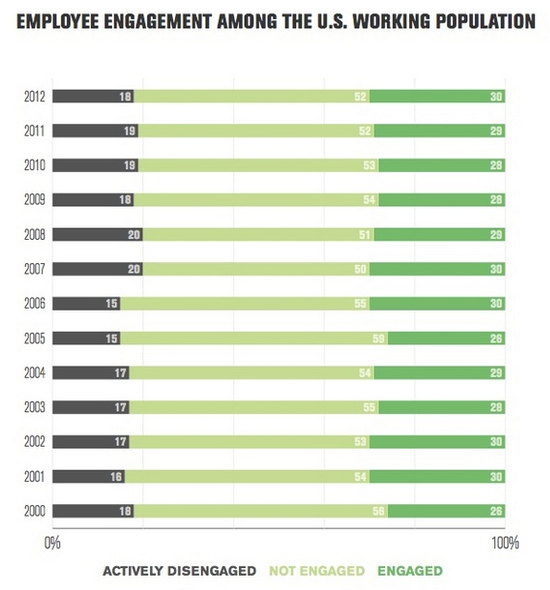
Take a look at this graphic from a recent Gallup Survey (full report here):

galloppole

As a Christian parent, how would you prepare your child for this marketplace?  If you are a student, what excites you about entering this marketplace?

Andrew Kern recently put it this way (forgive my bad paraphrase, Mr. Kern): “As Christian schools we are not in the business of preparing our students to ‘be successful’ in the marketplace, rather we are preparing our students to heal the marketplace.”

As a teacher, this perspective changes everything for me.

Ideals vs. Practicality

cranelift

Most organizations, institutions, universities, or corporations that enjoy any kind of longevity are founded on a set of principles or ideals. Often these are wrapped up in a mission statement. The older an institution becomes, the more likely this institution is to stray, deviate, or “drift” from these foundational ideals. Perhaps those folks who established the ideals are no longer around. Perhaps sound, thoughtful explanations for “why we do it this way” slowly become replaced with legalistic statements of “this is just how it’s done, this is how it’s always been done.” Perhaps the “why” was never really communicated in the first place. Perhaps new players in the institution question the soundness of the original ideals. Perhaps the mission of the institution must change because the original ideals were not timeless in nature and thus have become anachronical. Perhaps the culture changes and so a slight deviation from the original ideals is deemed necessary in order to “remain relevant,” or “remain sustainable.” Whatever the reason, this potentiality and tendency to “deviate from original intent” is a well known characteristic of just about anything in which human beings are involved, the first example of which of course occurred with the first human beings to inhabit the Earth.

Our country was founded on ideals (or at least principles), and one entire branch of our government exists for the explicit purpose of making sure that we maintain the integrity of those principles in practice. But even parts of our constitution have been called into question or brought up for more “relevant interpretation” in recent years.

My question is this: specific to classical Christian education, what are the ideals that must be held to? Or does holding to a set of ideals threaten sustainability? To what extent must we “flex” with the culture in order to “remain relevant for our market”?

I have heard the goal stated as a “healthy tension between ideals and practicality.” And any school who subscribes to both Christian and classical ideals – both of which are quickly becoming “outdated” in the West, particularly in the metropolitan centers of America where the focus on education is largely utilitarian – is going to find its leaders having this discussion of ideals versus practicality.

So should we (and by “we,” now, I mean classical, Christian schools) set as our target some compromise between “theory and practice,” between “an idealistic picture of education and a form of education that is actually sustainable and marketable”? Compromise can be a very good thing. But is it good in this sense? Can a white-knuckled “in the clouds” clinging to ideals morph into self-righteousness and legalism and in the end decrease the actual effectiveness of your mission? Or are there some ideals that must be clung to, regardless of how well they test with the focus groups?

I don’t necessarily intend to answer these questions here, at least not directly. For one thing, I don’t think we can actually begin to answer them until we define what the ideals are.

But let’s say for a moment that we do define some ideals for a school that are not only timeless but also biblically and pedagogically sound. Do we still aim for compromise?

Some may argue that this question can only be answered in practice, that there is not one answer that is universally applicable.

But I’m not totally sure.

There is certainly a time for those of us who are idealists to get our heads out of the clouds and get practical about certain things. But is there a time to cling to ideals in practice? Is this last phrase an oxymoron?

Let’s consider a couple of idealists and see how it worked out for them. (And to be clear, I am not using “idealism” in the philosophical sense, but rather talking about people who had and held to certain high and noble ideals. Note the previous emphasis – I am also NOT talking about people like Hitler whose corrupted, evil ideals did much violence to humanity.)

The obvious first example is Jesus himself. Not only did he live the “ideal” life (a life as it was originally intended: without sin), but he exhorted sinners around him to do the same. “Be perfect, therefore, as your father in heaven is perfect.” “Go and sin no more.” “Let he who is without sin cast the first stone.” (I wonder how many folks in the crowd that day wished he had said, “Okay, if you’ve only sinned ten times today, you get to throw three stones. Those of you who have been extra good and sinned less than five times today can throw six.”)

Did Jesus fail to be relevant to the culture? Well, what those first century Jews really wanted was a political king, a conquering savior. Washing feet and dining with tax collectors – well, that wasn’t really what they had in mind. Turns out it didn’t end too well for Jesus (well, in the short run, that is).

Upon his triumphant resurrection, however, Jesus’ disciples finally “got it.” This “ideal” that Jesus represented, it was worth pursuing, even though it would require a counter-culturalism like the world had never seen before. In fact, this ideal was worth dying for. And die they all did; for most, of course, not by natural causes.

The story then continues with Paul, and thanks to his clinging to an ideal even after having been boiled in oil, beaten, and imprisoned, we have the God-inspired wisdom of the epistles.

The biblical examples are perhaps obvious but I think worth repeating. Our familiarity with scripture can sometimes lull us into thinking that these stories themselves are simply allegories for a set of ideals, instead of the accounts of real men and women who were murdered for their refusal to deviate from something they believed down to the deepest depths of their souls.

There are of course many others in history who clung to ideals and suffered for their convictions. Dietrich Bonhoeffer, Dr. Martin Luther King Jr., and Mahatma Gandhi come to mind, to name a few.

If we make the ideal our target, we will naturally fall short, because we are human. But won’t we get much closer to the ideal than if we make compromise our target?

Further, as regards our Christian faith specifically (personal or corporate), only by aiming at an ideal do we see our true and absolute need for a Savior, our need for God’s daily grace and provision. If we aim at compromise, we just may fool ourselves into thinking that this Christian thing is something we can manage (and define the parameters for) on our own. And if culture drives our compromise, won’t our target constantly drift as culture changes and pulls our compromise further from the ideal?

But ideals are risky. What’s the ultimate risk of holding to an ideal? The examples above would suggest death. And maybe we are not talking about personal death now, but perhaps the death of your institution. What does this mean for a classical Christian school. Well, Andrew Kern has said, “A school that isn’t willing to die is not a school worth living.”

So I will ask again, this time more pointedly: for a classical Christian school, what are those ideals that are worth dying for?

Do we stand firm and embrace “much versus many” in everything we do? Do we in practice hold as our priority the formation of our students’ souls over the filling of their minds? Do we maintain a skepticism towards technology even when iPads would make those backpacks a lot lighter? This list could go and on and we haven’t even scratched the proverbial surface.

Let me leave you with one last story of an institution that embraced an ideal. This example may seem out of place within the context of classical and Christian education, but I think there may be something to learn nevertheless. The institution is ExxonMobil.

Before the merger with Mobil Oil, when Exxon was just Exxon, the company suffered international embarrassment in 1989 when its oil tanker Valdez ran aground and spilled hundreds of thousands of barrels of crude oil into Prince William Sound. This event catalyzed a movement within the company from top down to not only make safety a higher priority, but to establish safety as a defining and driving ideal of the company.

Fast forward 14 years later. I was in the second year of my young career as a neophyte mechanical engineer working for an engineering, procurement, and construction company based in Houston, Texas. After spending a year in “the office,” my supervisor decided it was time for me to “get my feet wet in the field,” so he assigned me to the field engineering team of one of our construction projects in the ExxonMobil Baytown, Texas refinery. (Talk about going from theory to practice, by the way. All the engineering graduate classes in the world could not have prepared me for the “real engineering” that goes on in real-time during onsite construction of complex refinery systems. I’ll never forget taking my brand new shiny white hard hat and scraping it along the asphalt in the parking lot in order to give myself the appearance of a more “seasoned” engineer; my plan failed miserably.)

Before I could even enter the refinery, I had to sit through an entire 8 hour day of training, which included videos, classes, and tests. I remember thinking how much a waste of my time it was – I likened it to being at the DMV.

Upon getting settled in my construction trailer office and then making my way out for a guided tour of the job site, I couldn’t believe how many “safety people” were walking around or just standing around watching what was going on. These were people who were paid solely to enforce safety procedures and perform audits of safety practices.

And boy were the safety procedures and practices numerous! An entire crew had to write up what was called a Job Hazard Analysis before starting ANY work, even if their work only consisted of painting a handrail. It was very clear that a seemingly disproportionate amount of time and money was being spent on “safety.”

But surely all these safety protocols are like speed limits, I thought. Surely when the work really has to get done, these people don’t really follow all these procedures to a T. I mean, that just wouldn’t be practical. That would slow everything down. That would cost too much money.

But they did. Always. Without question. And they were serious about it, too. Nothing about safety was taken lightly.

And then there were all the safety meetings. These were meetings at the beginning of each week, or sometimes in the middle of the week or maybe even on some random day, and everyone on the job site had to attend. We’re talking hundreds of hourly employees, just sitting, sometimes for over an hour, listening to someone talk about tripping hazards. And boy were those meetings serious.

Really? I thought. ExxonMobil is all about maximizing profit. Look at all the money going out the window right now!

The first month I was on the job, a 40 year veteran of ExxonMobil, one of their best and most respected combustion engineers and an all around swell guy, stuck his head in a vessel just to look on the inside (the vessel was out of service), but he did so without a permit. The next morning he was cleaning out his office. Fired. On the spot. No questions asked. I couldn’t believe it. Not only was I just getting to really like this guy, but he was my client contact for much of my field engineering work. He was the brain of the operation. And he had served the company faithfully for over 40 years! It made no sense to fire him just for looking into a vessel.

But for ExxonMobil safety had become a nonnegotiable ideal, and no one was exempt from the expectations attached to that ideal. No one.

A few months later, our company was doing some maintenance inside the prime money-making unit of the refinery: the Cat-Cracking Unit, the unit that makes gasoline. This unit produced enough gasoline every day to earn the company $2.5 million in profit. Every day. The maintenance we were contracted to perform required that this unit be shut down for an entire month. You can do the math, but needless to say we were working literally around the clock (two shifts per day), seven days a week to complete our work and bring this unit back on line as soon as possible. Every morning at 6:00 a.m. the lead ExxonMobil project manager would storm into our construction trailer, throw his clipboard or kick a trashcan, and remind us that we were costing him $2.5 million a day. It was a stressful project on a tight budget with an impossibly short schedule that we were daily asked to make improvements on.

Then one day a construction hand accidentally kicked a hammer, which then fell off the level he was standing on and landed on the level beneath him. The hammer didn’t come close to hitting anyone. It was an honest mistake. No harm, no foul, right?

What followed was an all-hands-on-deck safety meeting that lasted the entire afternoon, at the end of which the ExxonMobil refinery owner told us all to go home for three days. “Things were just getting too sloppy,” he said, “and we’re headed towards a serious safety accident if this continues.”

I couldn’t believe it. We were getting yelled at every morning to work faster, spend less money, improve the schedule, and now this guy is telling us all to go home for three days? That’s six shifts worth of work lost and $7.5 million down the drain! But he didn’t even blink an eye when he told us to go home, and no one flinched at his decision.

About a year later we were installing a huge multi-million-dollar piece of equipment (think the size of a 3-story bank), which required a very precise and tenuous lift with the biggest crane you’ve ever seen up and over an existing multi-million-dollar in-service unit. The most senior rigging engineer from our company was on site to oversee the lift, as the stakes were obviously extremely high. A piece of equipment this large is typically lifted with guide ropes tied at each corner, so that men on the ground can hold the ropes and keep the equipment from rotating as it is lifted. However, in this case, the guide ropes had to be released for the apex of the lift as the piece of equipment passed over its highest obstruction. Well, one of the guide ropes became snagged on a corner of the existing unit, and our rigging engineer quickly – instinctly – stood up on a handrail to loose the snag. By doing so he saved the lift. He was a hero.

Then he was promptly removed from the job site and his access to the refinery was permanently revoked. Just like that. It didn’t matter that he acted out of instinct. It didn’t matter that he did the right, practical thing in saving the lift and potentially sparing millions of dollars in damage. He had stood on a handrail, and standing on a handrail was one of the cardinal sins in the book of ExxonMobil safety. I’ll never forget, as soon as his foot hit that handrail, the engineer behind me said, “Well, he’s gone.”

These are just a couple of the crazy “zero tolerance” type stories. Suffice to say, safety at ExxonMobil was a culture, and either you became a part of that culture, or you were given the boot. Two years into my assignment in the refinery, I found that I no longer questioned any of the safety protocols. I never caught myself thinking, “This is such a waste of time, why are we doing this?” What’s more, half the time I didn’t even consciously think about all the safety rules, I was just following them by instinct. In fact, I became hyper sensitive to anything that didn’t feel or look “safe.” At any job site I entered, without even thinking about it, I would automatically scan the area for safety hazards. Even today, 6 years into teaching and 8 years out of the refinery, I still find myself finding things unsafe with even a DOT crew patching a hole on a side street. ExxonMobil had successfully inculcated within me its safety ideal.

Today ExxonMobil is the world’s most valuable company. They are also one of the safest, despite the inherent high risks in much of their operations. One could certainly make the argument that safety simply increases their bottom line in this age of rampant litigation. But whatever the motivation, they embraced an ideal and it became part of who they are. They embraced this ideal even when it cost them big, even when it clashed with practicality.

I wonder what conversations were had in the board room in the early 1990s when this safety initiative was first born. Was anyone called crazy? Impractical?

Let’s chew on this for a while. I could continue, but – on a practical note – it’s past my bedtime.


Imago Dei and the Holy Act of Diaper Changing (or, Where This All Might Have Started)

imagodeiimage

In an earlier post I mentioned that part of the reason for starting this blog was a sudden outpouring of thoughts and reflections on education – and my experience with education, specifically – that I felt the need to write down.  Whether or not these thoughts are truly for a larger audience or not remains to be determined.

But what catalyzed this compulsion for reflection?  Well I think I can answer that question definitively.  What follows below is something I wrote a few weeks ago while my students were taking ERB tests.  In fact it was very fortuitous that the students were in standardized testing for two hours, because this was just enough time for me to completely soak the computer screen with a story that I just had to get down in writing that morning.  Perhaps this story will give better context for where this blog might be headed.

So, without further preface, here is what I wrote that day.

– – – – – – – – – – – – – – – – – – – – – – – – – – –

“Then God said, ‘Let us make man in our image, in our likeness, and let them rule over the fish of the sea and the birds of the air, over the livestock, over all the earth, and over all the creatures that move along the ground.’  So God created man in his own image, in the image of God he created him; male and female he created them.” 

Genesis 2:26-27 (NIV)

This morning I had what can only be described as a conversion experience.  One of my coworkers recently turned me on to the Circe Institute, an organization whose expressed purpose is to support and promote classical Christian education.  The Circe website is loaded with great resources, my discovery of which came at a time of greater than average hunger for better articulation of the classical Christian mission.  Well this morning I was listening to a conference talk by the Circe Institute’s founder, Andrew Kern.  In this talk Kern articulated so well what had, to that point in my teaching career, only lived and occasionally welled up inside of me as a passion for what I called “Kingdom teaching.”  I knew that this teaching gig was serious business – eternally serious.  And I felt like I was doing a decent job.  But my articulation of what this “Kingdom teaching” looked like was lacking.

Kern helped me with fleshing out this idea.  In his talk, Kern stated very poignantly that our whole purpose as teachers is to strive for the blessedness (i.e., “completion,” “perfection”) of our students – to see them fully realized, that is, to see Christ fully realized in them.  Said another way, we are to steward them towards their created purpose: to be the reflection of their Creator.

You have heard it said perhaps many times in church or even educational settings, that if you are having trouble loving someone, think of her as being created in the image of God.  I would like to go further though and say that the only way to truly love someone is to love him as an image-bearer.  And by extension, the only way to educate someone is to love him as an image-bearer.  After all, the word “education” comes from two words in Latin, e ducere, which together mean “to bring out from within.”  What are we trying to bring out?  I would argue that we are trying to bring out – to draw out – that image of God, that Holy reflection, that Kingdom purpose.  And since by teaching we are essentially saying to our students, “Imitate me,” the only way we can draw out that image of God within our students is to be that image ourselves.  Lord have mercy.  Holy Spirit help us.

That moment that we are reflecting God’s image to our students, and we see that reflection when we look out at them – that is the Narnia moment, the moment of passing through the back of the wardrobe.  That is the moment at which we cease to tug at fur coats and begin to grasp at fir trees.  That is the moment that we transcend fabrications and encounter authenticity.  That is the moment at which the lesson plan falls away and the teacher becomes the curriculum.  That is the redemptive moment.  That is why we teach.

But redemption does not come without repentance.  There is a humility that we must embrace as teachers: this high calling spoken about above is not to be undertaken by our own white-knuckled manipulation and toil.  It is only by being in right relationship with God – it is only by being broken, by realizing our utter depravity and God’s infinite goodness, by holding our hands out in total surrender to God – that we are in a position to reflect Christ to our students.  We must be washed clean.  Daily.

And is that not what our students want as well?  The request just looks a little different coming from them.  Their moment of repentance in the classroom is the moment at which they confess: “I don’t know.”  That is the teachable moment.  That is the poverty of spirit that invites redemption.  As Andrew Kern says, “The person who is not brought to repentance cannot see the Truth.”  Our students want to be washed clean – they desire to embody their created purpose, they yearn to reflect their Almighty God.  Will we lead them in this transformative experience?  Will we cultivate the trusted relationships and create a safe environment in which they are willing and able to be drawn out – ah, to be educated!?

Do our students know that we desire above all else for them to be washed clean and made perfect in the eyes of God – to be made into the image of their Savior – to fulfill their created purpose – to return to the Garden?  Do they trust us enough not to be ashamed?

Let me now return to my experience this morning.  Immediately after finishing Kern’s talk, I jumped into the shower, as is my morning routine (it was a school day), but I couldn’t get the talk out of my head.  I kept thinking about the significance of this Imago Dei approach to teaching.  And then it hit me: I was overwhelmed with grief at how much violence I myself have done to this Truth, how I have not taught as if my students were little image bearers.  While washing my hair I was compelled to get down on my knees in the shower and repent.  I sobbed.  I cried out to God with the same phrase over and over: “Wash me clean, wash me clean.”  As I felt the hot water raining down on my head and running across my back my request to God left metaphor.  It was a baptism like I had never experienced before.  I felt as if God himself was pouring water over me.  My only possible response at this point was to worship God, and I did – kneeling right then and there in the shower.  I praised Him for His goodness, thanked Him for His redeeming power.  I felt clean like never before.

Now I should say at this point that rarely do I get overly emotional about my faith.  I will lift my hand in worship at church from time to time, but rarely do I allow my arm to be fully extended.  In fact, perhaps my biggest sin is that too often my faith lives in my head and forgets the path to my heart.  My point in saying this is that I am not a “fall to my knees” kind of Christian – God have mercy on me.  This shower moment was not a normal scene in my faith journey.  God truly got to me that morning.  He drew me out.  He educated me.

So as I continued to do the normal, mundane things of my morning routine, I was still walking on air.  I had just gotten dressed, though, when I heard my 23-month-old crying at her bedroom door (which we lock from the outside these days, as she is quite capable of exiting her “big girl bed” and, thus, her room).  I walked in to see what the problem was (which usually means just putting her back in bed and telling her that it’s not yet time to get up), and she immediately said, quite pitifully and urgently, “Daddy!  Poopoo!  Tee-tee!”

Now I have to pause here and insert a disclaimer.  I am not about to go into unnecessary detail, but for purposes that I hope will soon become readily apparent, this next part is kind of gross.  But I know that for you parents out there, the moment I am about to describe will resonate with you, even if discussion of poopy diapers is typically taboo in any formal social setting, particularly one of higher education.  For those of you who are not parents, I apologize in advance.

My daughter Alice had what we call in our house “an epic diaper,” one for the record books.  This I knew the moment I walked in the room.  It was at this point that I said, “Really, God?  I guess this is your way of taking me off the mountaintop and back down to reality.”  “The end of my enlightened morning,” I thought.

Now for those of you who have or have had toddlers, you know that diaper changing can sometimes be like the calf-roping contest in a rodeo.  Often times Alice will try to outrun or out-climb you in order to avoid a diaper change.  And even once you get her on the changing table, often she will arch her back or kick her legs.  This does not happen every time, but it certainly happens a lot.

This particular morning was not one of those calf-roping experiences, however.  As soon as she announced to me the problem – her filthiness – she walked of her own volition over to the changing table and lifted her arms out for me to pick her up.  I placed her on the changing table, and rather than put up a fight, she just laid there peacefully – in relief, even – while I changed her diaper.  And it was a messy one.  Lots of wipes.  Parents, you know what I’m talking about.

But as I was cleaning her up, still a bit aggravated by this “down to Earth” moment coming at the end of an otherwise “heavenly encounter,” I saw out of the corner of my eye my daughter looking up at me, so I turned to look her in the eyes.  She continued to fix what I can only describe as an adoring gaze on my face and, when our eyes met, she touched my arm gently, smiled, and said, very softly and peacefully, “Daddy.”  I replied, “Hi Alice.  Daddy loves you.”

It was in that moment that it all clicked for me.  I had come to my daughter in a moment in which she was totally helpless to change her state of being.  She was filthy, and she knew it.  And she could do nothing about it.  But rather than run and hide, she called to me, she told me that she was filthy, and she submitted to the process of being cleaned.  And in being cleaned, I think she felt truly loved.  I can’t help but contemplate the significance of her naming me in that moment: “Daddy.”

Fathers, I hope you are all changing poopy diapers out there.  Don’t let your wife steal all the God-moments!  In some gross but very human, very real, very palpable way, I now believe that changing a poopy diaper is one of your first opportunities to reflect the image of Christ to your child in a way that he can truly internalize, long before he will be able to articulate.  In a moment of vulnerability and helplessness and filth – filth that always seems to be more disgusting to a father – you have the opportunity to wipe your child clean.

I think God used this experience of changing a big, messy diaper because it is so visceral.  I mean, there is no avoiding a physical reaction to an “epic diaper.”  Rarely does filth take on a more tangible form.  But how often, as adults now, do we underestimate or totally ignore our own dirtiness?  As infants and then toddlers we are forthcoming with our filth (do we have a choice?), but sometime very quickly thereafter we learn to hide and then we spend our entire lives trying to “clean ourselves up” or at least pretend to be clean.  (Is this not what Adam and Eve did with the fig leaves when they first discovered that they were naked?)  By the time we are in middle school, like the students I teach, we have gotten so good at hiding and covering that we don’t even know anymore what it is like to stand in the clearing fully naked – to be fully known.  Perhaps we don’t even know who we are anymore.  And right about this time adolescence kicks in and we are given even more tangible reasons to run and hide.  We eagerly want to be known – to be washed clean – to find our true purpose, but we have no idea how to articulate this let alone where to start.

Folks, I am not just describing teenagers growing up in secular families and attending public schools.  I am describing so many of the students in our own Christian schools.  Am I not?  Sure, our children know how to parrot the Sunday school answers, but they might as well be saying, “I know that I am made in the image of a peanut,” as their likeness to a salty ballpark snack is probably just as ethereal as their Godly birthright.  And this is because the world – and so often, too, Christian schools – have hijacked (sometimes without realizing it) the true purpose of education.

And so I was reminded this morning – by God speaking through Mr. Kern and then my daughter – that my role as a teacher, as a father, as an adult in authority over children, is to see Christ fully realized in the children who sit under my tutelage.  This necessarily requires that I am in right relationship with God so that I can clearly embody the Truth, this necessarily requires that I am in right relationship with my students so that they trust me enough to adopt a posture of spiritual poverty in my presence.  This necessarily requires that I restore the true purpose of education IN MY CLASSROOM.  Redemption is always a personal experience, so the recovery of education’s good and proper purpose starts when we close our classroom doors, doesn’t it?

The book of Revelation tells us that our students will one day be priests and rulers in God’s kingdom.  Do we believe this?  Do we discern within even the most frustrating student the very image of our Redeemer, the very countenance of a king?  It is there, that much the entire Testament of our Lord tells us.  But are we looking for it?  Are we listening for it?  Do we even hear it within ourselves?

C.S. Lewis wrote in The Weight of Glory:

“Almost our whole education has been directed to silencing this shy, persistent, inner voice; almost all our modern philosophies have been devised to convince us that the good of man is to be found on this earth.”

Do we know what is at stake here?  Do we truly know what it means to teach a “Christ-centered” education?

Will we humbly fall at Christ’s feet and let him wash us clean so they we can see the Truth clearly?  Will we invite our students into the same transformative relationship?

Will we, as Kern says, “arouse, listen to, and train this inner voice” that Lewis speaks of?  Will we regard our students as the very imago dei?  Will we draw them out into the clearing?  Will we educate them?