Category Archives: Uncategorized

How to Build a Boat

boatinsea

“When you want to build a ship, do not begin by gathering wood, cutting boards, and distributing work, but rather awaken within men the desire for the vast and endless sea.”

 – Antoine de Saint Exupery      (thanks, Jamie Smith, for bringing my attention to this quote)

This simple and beautiful quote, attributed to the author of The Little Prince, pointedly states the proper metaphor for Christian education.

Are we merely teaching students how to pray, how to find the book of James, how to “be kind,” how to “put others before themselves” . . . or are we training their desires toward the Kingdom of God, after which the gathering of wood and cutting of boards follows necessarily?

“Do Your Math!”

spiral

Many students “don’t like” math because they “can’t do” math.  Many students “can’t do” math because math has only ever been presented to them as something “to do.”  Rarely is math presented as something “to understand,” even less often something “to contemplate,” and hardly ever something “to love.”

Why is that?  We know why.  Math is the lowest hanging fruit (science is a close second) for the “practical” utilitarian agendas of modern education reformers nationwide.

Math tutors everywhere make money hand over foot showing kids how to use shortcuts so that they can “do math.”  “Don’t worry about understanding this concept, just learn the trick!”  Besides, parents aren’t going to pay a tutor to help their child love math; the expected return on their investment is quite simply a solid “A” in the class.

Or a high score on the SAT (don’t get me started).

So we’re left with students (and I was one of them!) who can find the area of a circle, but can tell you nothing about Pi except that it can be approximated as 3.14.

Big deal, you say.  Does a carpenter need to understand the elegant beauty of the design of a screw if he can use screws effectively and efficiently to build a beautiful house?

Maybe not.

But if we decide that math is for doing, not for knowing (much less for loving), then we are withholding beauty and truth (and, in my opinion, a piece of God’s glory) from our students.  In other words, we’re cursing them.  And math class will end up being a complete waste of time for all the students who don’t become engineers or accountants.

But no, you say.  For those non-accountants and non-engineers math still teaches them to think logically!  True.  But if that’s the only use of math for those students, we might as well let them drop math and add more Latin classes.  Oh wait; we can’t do that, can we?  I forgot about those darned SATs!!

I have some students who can “do math” better than others.  That will always be a reality.  But you know what else I’ve discovered?  When I walk my students through the exercise of creating the spiral of a nautilus shell by starting with the Fibonacci Sequence, the biggest smiles of pure delight (without fail, almost every time) appear on the faces of those students who are not as good at “doing math.”

I find this fascinating, if not sad (for those students who would rather get back to the business of doing math).

The ability to do math is a useful skill that will prepare our students for the marketplace.  The ability to know and love the divine beauty in math will further conform our students into God’s image.

My encouragement to math teachers (myself included!): Make math a conversation (it is a language, after all).  Insist on understanding, on knowing.  Invite contemplation.  Reveal beauty.  Model curiosity and wonder.  Then, and only then, do math.

You may end up covering less, but you will uncover even more.

I Cannot Give an Answer (Part 2)

tree12

An excerpt from math class today . . .

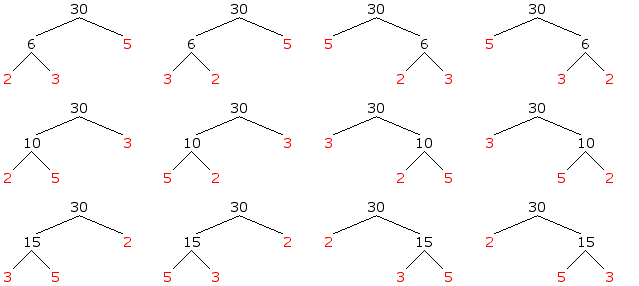
Me: “Why is four a factor of twenty?”
Student: “Because it goes into twenty.”
Me: “Can’t everything ‘go into’ twenty?”
Student: “Okay, because four times five is twenty.”
Me: “Forty times one-half is twenty.  Is forty a factor of twenty?”
Student: “No.  But I know that four is a factor of twenty.”
Me: “Why?”
Student: ” . . . I don’t know.”
Me: “That’s a beautiful answer.  Now you’re ready to learn.”

I Cannot Give an Answer (Part 1)

path

With all this talk of “wisdom” and “excellence” as of late, it seems appropriate to give humility the spotlight.  The call to humility can be a necessary, recentering reminder along the road to wisdom that admonishes us against the temptation of pride (“knowledge puffeth up”).  We need that continual humbling along our journey, to be sure, just like a road trip warrior is reminded every 6 hours or so that, despite his best efforts to advance quickly, he must stop and acknowledge that ultimately his progress is totally dependent on and owed to gasoline.

More fundamentally, though, the call to humility is more than just a pit stop along our path; it is a call to return home.  And sometimes this requires a wholesale abandonment of our current route – not simply a slight correction, but a 180 degree turn.  “What a waste of gasoline!” the world will say.

Are we simply reminding our students to acknowledge God “along the way,” or are we showing them the path back Home?

“I will not boast in anything
No gifts, no power, no wisdom
But I will boast in Jesus Christ
His death and resurrection.

Why should I gain from His reward?
I cannot give an answer.
But this I know with all my heart
His wounds have paid my ransom.”

A Note to My Class of 2013 HPS Grads

Hey guys.  Miss me yet?

I watched the HPS graduation video with Anne last night (she wanted to see it), and I must admit I got a little teary all over again.  My sentimentality was greatly mitigated, though, by my constant annoyance with the sound of my own voice.  I don’t know how you all listened to me talk for three years straight.  Yikes.

Anyway, the combination of seeing your faces on the screen and the fact that school is about to kick into full swing compels me to say something to you.

So picture me sitting on my stool, hot coffee in a Tervis Tumbler in one hand, yardstick in the other.  And now pay attention to these brief words from the gospel of Luke, chapter 12:

“Do not be afraid, little flock, for it is your Father’s good pleasure to give you the kingdom.”

Remember your destiny, brothers and sisters.  Remember your destiny.

That is all.  Go finish your summer reading.

Excellence

trophy_case

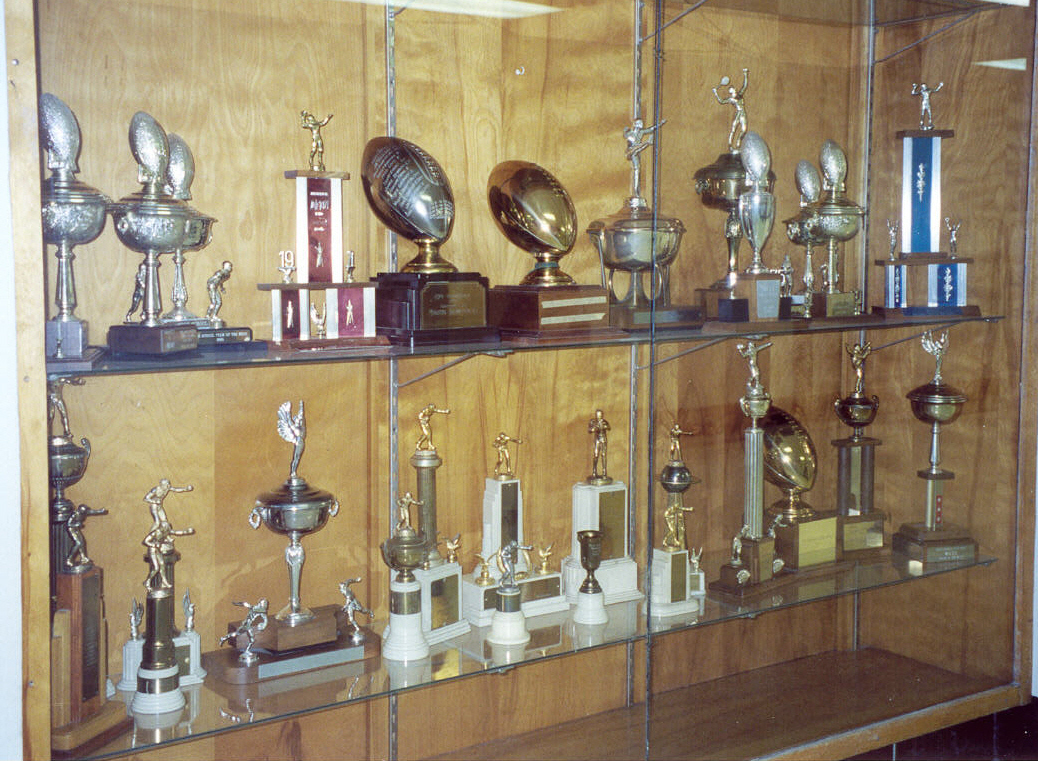
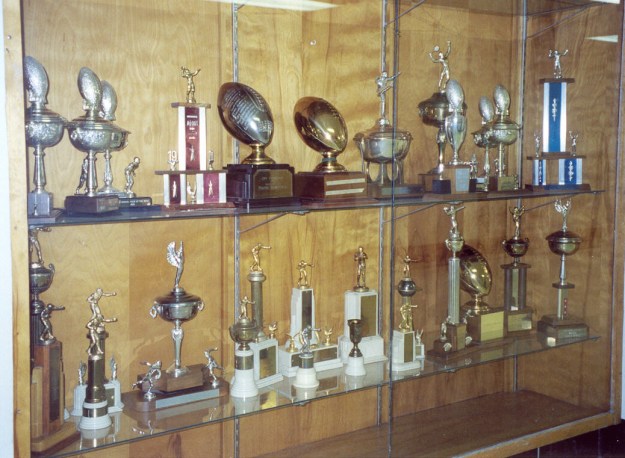
In classical education, we talk a lot about excellence.  “Doing everything with excellence.”  We then invoke 1 Corinthians 10:31 to establish that we do everything with excellence “for the glory of God.”

And I think all of this is great . . . except when we become enamored with our own excellence – when we gaze too long (and too longingly) at the beautiful results of human-making.

In the “pursuit of excellence in everything we do,” we can be tempted to strive merely for the excellence of man for the “glory” of God, rather than ultimately seek the excellence of God for the transformation of man.

Too often we either make excellence itself the end goal (read: idol), or we choose what is important to man, do it “with excellence,” then ask God to bless our efforts.  So, effectively, we glorify man and then give God a high-five.

And this message of misplaced glory is subversively communicated in our schools, even in our Christian schools.  Do we recognize this?  We ask our students to strive for excellence in their academics.  When asked “why” we answer, “To bring glory to God,” then we give them a numerical grade for their efforts, which immediately binds them to a secular (and, I believe, broken) system of assessment that determines their “net worth” to other schools, colleges, and companies by “ranking” them among their peers.

“We do not dare to classify or compare ourselves with some who commend themselves. When they measure themselves by themselves and compare themselves with themselves, they are not wise.”  2 Corinthians 10:12

All this “bring glory to God” talk is great, Mr. Faulkner, but I’ve got to get into a good high school, and that means I’ve got to strive as hard as I can for that excellence A.  (Notice the subtle shift from a virtue to a mark.)  And thank you, Jesus when I see that A on my report card!

And so, if we are not very careful, we establish in our schools – in our Christian schools – a metaphor for a nominal, compartmentalized Christian life in which the desires of man are sought and God is “tacked on” at the end so we can “give Him the glory.”

No wonder our students become disenchanted and disillusioned when they become old enough to see through our all-too-often “spiritualized” exhortations to otherwise secular ends.  No wonder I often get blank looks when I ask the question, “But what does that really mean – to glorify God?”

Striving merely for the excellence of man leads to self-sufficiency and the nearly inevitable establishment of success as a very dangerous and ultimately unfulfilling idol.  Or, as a colleague of mine puts it, striving merely for the excellence of man leads to a good high school, then a good college, then a good job, then a nice house and nice car, then a midlife crisis.  We may even find ourselves doing something with excellence that was actually never God’s will for our lives in the first place.  And in the worst case, we allow this credo of “my best for God’s glory” to morph into a works-based theology.

Alternatively, when we seek first the excellence of God, we are graciously brought into God’s will, and we are transformed because our own efforts are always found wanting.  Striving for the excellence (read: perfection) of God necessarily leads to Jesus.

“Be perfect, therefore, as your Father in heaven is perfect.”

Jesus did not end the Sermon on the Mount in this way to frustrate his audience with an impossible commandment.  Nor do I think he intended for everyone to leave that day and simply set out to make the best chariots possible.  He was inviting them (us!!) to a state of perfection – a state of excellence, a state of completion (the Greek here, teleioi, that is typically translated as “perfect,” can also be translated “complete”) – that only his death and resurrection could satisfy.  In short, he was calling them to repentance – repentance that would lead to their ultimate transformation into truly excellent humans.

I write all of this not to take a stand against exhorting our students to excellence; of course I will continue to ask my students to “do everything with excellence.”  My purpose here is a warning: this idea of excellence carries with it much weight and can easily (read: unwittingly) be used to curse our students rather than bring them into a transformative relationship with the only true Excellence.  How do we guard against the former result?  How do we ensure that we are doing everything with excellence for the glory of God?  I think we must ask (at least) these questions:

1)   Is the work which we “set out to execute with excellence” actually aligned to God’s will?

2)   Is the excellence in our work characterized by humility?  Said another way, when we achieve, do we find ourselves on our knees before God more or less?

3)   When we do excellent work, are we conformed more into the likeness of Christ or do we seek the praises of men?  Said another way, does our excellence serve God or ourselves?

4)   Do we hold on loosely to our accomplishments, ultimately finding peace and satisfaction in God himself, or do we place our excellence in a display case and gaze at it proudly and longingly?

I will end this wandering post with words that are much more excellent than my own.  As is his custom, I think C.S. Lewis drives the fourth point home much better than I do (and in this excerpt from The Weight of Glory he is referring explicitly to beauty, not perfection, but I think in Philippians 4:8 terms the two are analogous):

“The books or the music in which we thought the beauty was located will betray us if we trust to them; it was not in them, it only came through them, and what came through them was longing. These things—the beauty, the memory of our own past—are good images of what we really desire; but if they are mistaken for the thing itself they turn into dumb idols, breaking the hearts of their worshippers. For they are not the thing itself; they are only the scent of a flower we have not found, the echo of a tune we have not heard, news from a country we have never yet visited.”


Wisdom from Above

wisdomfromabove

I was reading Andrew Kern’s latest blog post over on the Circe Institute site, and it prodded me to read and consider carefully again – or perhaps for the first time with intentionality and in the light of education – James 3:13-18:

“Who is wise and understanding among you? Show by your good life that your works are done with gentleness born of wisdom. But if you have bitter envy and selfish ambition in your hearts, do not be boastful and false to the truth. Such wisdom does not come down from above, but is earthly, unspiritual, devilish. For where there is envy and selfish ambition, there will also be disorder and wickedness of every kind. But the wisdom from above is first pure, then peaceable, gentle, willing to yield, full of mercy and good fruits, without a trace of partiality or hypocrisy. And a harvest of righteousness is sown in peace for those who make peace.”

We say in classical education that we aim to cultivate wisdom, but how often do we simply attribute this wisdom to good teaching, the “right” curriculum, or – in the worst case – the diligent efforts of our students?  Sure, we would never come out and name these things as the sources of wisdom, but don’t we act like that one teacher is irreplaceable, or that new curriculum will “fix” everything?

But that’s only the tip of the iceberg.

Let’s say that we do acknowledge that true Wisdom is “wisdom from above.”  James goes on to tell us that this kind of Wisdom is “first pure . . . ”

This is where Kern really gets me to thinking.  If “wisdom from above is first pure,” then the cultivation of this wisdom in us:

1) Requires repentance, and thus

2) Depends 100% on Jesus.

Kern is much more eloquent at expounding on this idea, so you have my full permission (nay, encouragement) to stop here and go read his post (linked above).  If you would also like to entertain my musings, I’m going to endeavor to take a closer look at this adjective “pure.”

As has become my new hobby, I want to take a look at the Greek here.  The word for “pure,” as the primary adjective assigned to “wisdom from above,” is hagnos, which can mean “pure,” “chaste,” or “in a condition prepared for worship.”  This word is very similar to (same origin, I believe) as hagios, which can mean “holy,” “sacred,” “set apart for God,” or “likeness of nature with the Lord.” (ref: Strong’s Concordance)

There is much fodder for conversation in this range of connotations, but I want to focus on one in particular (and if you think I’m stretching this discussion by playing around with connotations, please forgive me and go back to Kern’s post):

“in a condition prepared for worship”

I just love this.  “Wisdom from above is first in a condition prepared for worship.”  This of course requires repentance so that we may be washed clean and reconciled to God and to our brothers and sisters.

“Who may ascend the mountain of the Lord?  Who may stand in His holy place?  The one who has clean hands and a pure heart . . .” (Psalm 24)

But do we in our schools – in our classrooms – associate the cultivation of wisdom with preparation for worship, with repentance?  I know that I have not.

To elaborate, let’s get really practical here.  Perhaps I have made a habit of starting math class with a prayer of thankfulness, or an invitation to the Holy Spirit for his illumination of our minds and hearts, but never a prayer of repentance.

God have mercy.  Forgive me.

For a teacher, this means not only repenting to God, but to our students and fellow teachers as well.  Jenny Rallens could have been reading from my own mind when she said in one of her recent talks at the SCL Conference (forgive the paraphrase, Jenny), “I just realized one day that I had made so many mistakes, done so many things wrong in my classroom, and I had never apologized to my students for anything.”

How can I truly hope to cultivate wisdom in my students – wisdom from above – if I stand before them unwashed and unreconciled?  How can we truly hope to educareto draw out, to EDUCATE – our students if we, ourselves, are in hiding?  My mind immediately thinks of all the days I have failed to embody the Truth to my students because I have not been prepared for worship.

Wash me clean, Jesus.  Purify my heart.  Help me to model this repentant posture for my students.

This education thing is so much bigger than we think – how do we Christians ever get hung up on test scores or college prep?  There is so much more at stake!

“Blessed are the pure in heart, for they shall see God.” (Matthew 5:8)

Fun with Four Digits

k1

This could be a fun post if several of you participate – so give this a whirl!

1) Take any four-digit number, using at least two different digits. (eg., 4013)

2) Arrange the digits in ascending and then in descending order to get two four-digit numbers, adding leading zeros if necessary. (eg., 0134 & 4310)

3) Subtract the smaller number from the bigger number. (eg., 4310 – 0134 = 4176)

4) Go back to step 2 with your new number from step 3 above.

Follow these steps in a loop until your answer from step 3 starts to repeat.  Write that repeating number as a comment to this post.

Go!

“Preparing Our Children for the Marketplace”

We hear these words a lot in education.  But for Christians who are in the pursuit of bringing God’s kingdom to bear and cultivating this same desire in our children, what should this “preparation for the marketplace” really mean?

Take a look at this graphic from a recent Gallup Survey (full report here):

galloppole

As a Christian parent, how would you prepare your child for this marketplace?  If you are a student, what excites you about entering this marketplace?

Andrew Kern recently put it this way (forgive my bad paraphrase, Mr. Kern): “As Christian schools we are not in the business of preparing our students to ‘be successful’ in the marketplace, rather we are preparing our students to heal the marketplace.”

As a teacher, this perspective changes everything for me.

And Now for Something Mathematical . . .

odds
Perhaps in this blog so far I have not given much indication that I actually teach math, save the previous post.  Well here’s something a little less philosophical (or is it?).  If any of my past students are still reading my blog (I don’t blame you if you’ve gotten bored), can you tell me what is special about this pattern of numbers?  Hint: It’s a little more odd than what is obvious.