Category Archives: Uncategorized

You are God’s Instruments

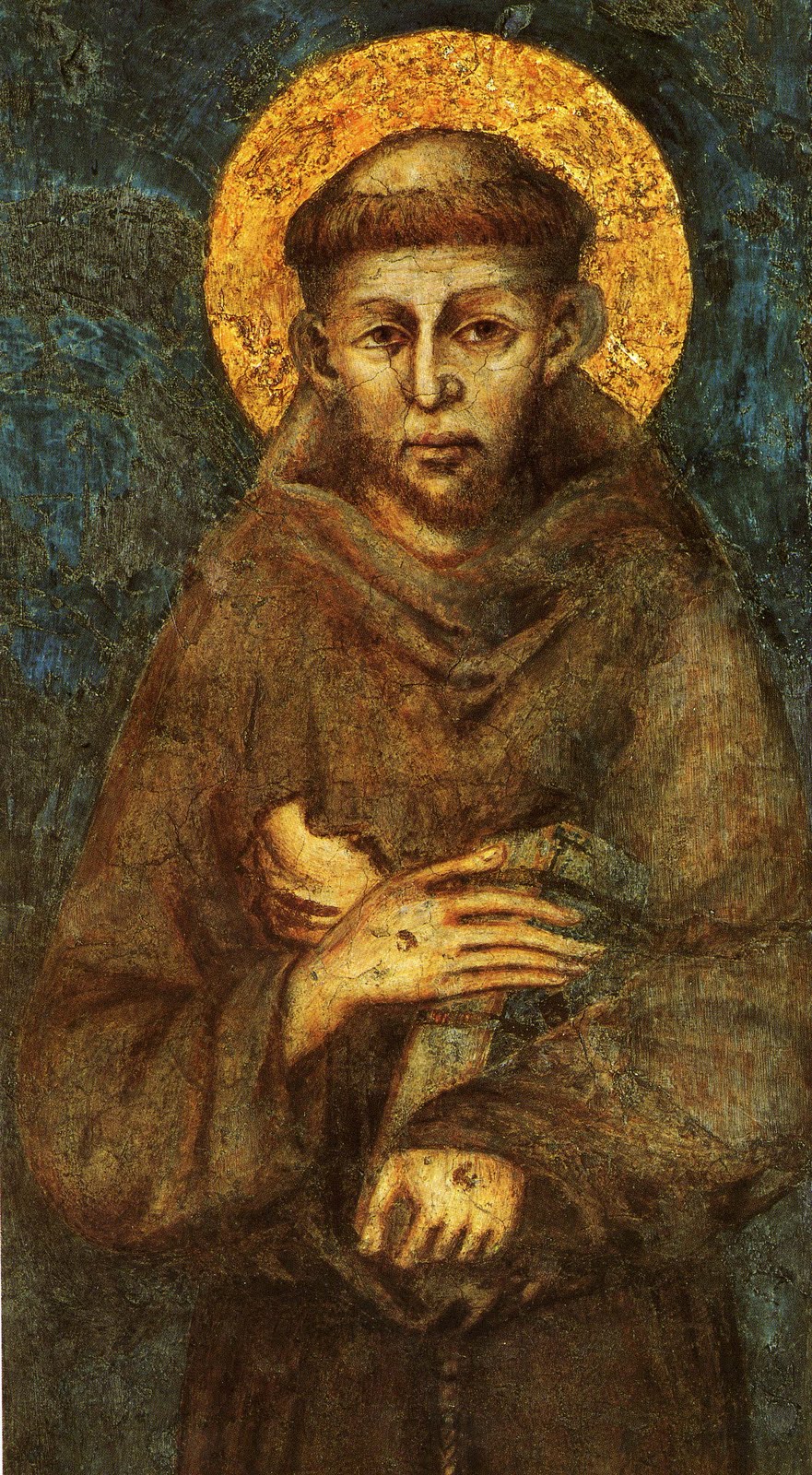
st. francis

To my Class 8 Graduates this year:

Tomorrow is your day.  There will be much pomp and circumstance surrounding your achievements, and all ten of you certainly deserve this honor.  Soak it up and enjoy it.

But as you walk out the doors of our school for one last time tomorrow, remember that this celebration is not just a festive acknowledgement of the end of your time here in middle school, but also–much more so–an acknowledgement of the genesis of a very new stage of your life elsewhere.

Your impact for God’s kingdom has only just begun.

As one last challenge to you–if you happen to read this post–would you commit to saying the following prayer (attributed to St. Francis of Assisi) in the weeks leading up to the beginning of high school?  I think the words it contains will help remind you of the most important work that lies ahead.  (This is a truncated, slightly-modernized version–feel free to look up the original):

Lord, make me an instrument of peace.
Where there is hate, let me sow love.
Where there is hurt, let me bring your healing.
Where there is fear, let faith arise.
Where there is sadness, let me bring joy.
And where there is darkness, let me be your light.
For it is in the giving that we receive.
It is in the loving that we find love.
It is in the dying that we are found.

I’m so proud of all of you.  See you tomorrow morning!

Good Friday

stkevin

From the late and great Seamus Heaney:

St. Kevin and the Blackbird

And then there was St. Kevin and the blackbird.
The saint is kneeling, arms stretched out, inside
His cell, but the cell is narrow, so
One turned-up palm is out the window, stiff
As a crossbeam, when a blackbird lands
And lays in it and settles down to nest.
Kevin feels the warm eggs, the small breast, the tucked
Neat head and claws and, finding himself linked
Into the network of eternal life,
Is moved to pity: now he must hold his hand
Like a branch out in the sun and rain for weeks
Until the young are hatched and fledged and flown.

*

And since the whole thing’s imagined anyhow,
Imagine being Kevin. Which is he?
Self-forgetful or in agony all the time
From the neck on out down through his hurting forearms?
Are his fingers sleeping? Does he still feel his knees?
Or has the shut-eyed blank of underearth
Crept up through him? Is there distance in his head?
Alone and mirrored clear in love’s deep river,
‘To labour and not to seek reward,’ he prays,
A prayer his body makes entirely
For he has forgotten self, forgotten bird
And on the riverbank forgotten the river’s name.

Not for the Faint of Heart

roman_ruins

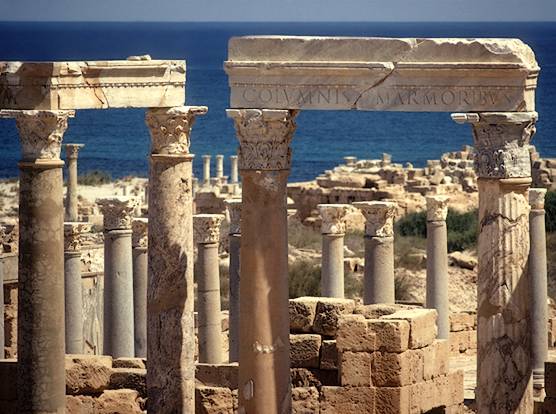
Classical education is hard.  I am not talking about the students’ reality–about rigor or high expectations or “too much homework”–but rather the reality that many of us now find ourselves in, after years of trying to teach or administrate within or cast the vision for this educational project we call classical education.  There are certainly days when I feel like all the cards are stacked against us–the three rivers of Productivity, Utility, and Competition overflowing their banks, fertilizing fields that have been planted with Ambition, Individualism, and Entitlement–all in service of the god of the harvest: Success.

Perhaps counter-intuitively, it doesn’t help that our country was founded on the “unalienable rights of life, liberty, and the pursuit of happiness.”

David Hicks explores the problem in depth in Norms and Nobility.  This quote is rather long, but worth a careful reading and contemplation:

“Whereas virtue and piety extract many obligations from the individual, requiring a significant level of self-mastery and self-sacrifice, the political concept of rights implies a set of obligations owing to the individual.  Not only does the democratic-utilitarian education based on rights prevent the student from achieving self-awareness by blotting out two-thirds of his human identity, but it clouds the perception of his relation to others.  The student perceives his classmates and fellow citizens as his servants, owing him rights, rather than as his equals to whose rights and needs he owes virtuous and pious submission . . . It is in the performance of man’s duties to himself, to others, and to God that his rights are important to him.  Without a knowledge of these duties, his concept of rights will be selfish and extravagant, tending to enlarge his expectations, while limiting his sense of fulfillment . . . The democratic youth does not need his school to tell him what his rights are: they beckon him from every billboard, every television set, and every political soapbox in the land.  Nor is the school needed to advise him in securing his rights; indeed, this growing practice may signal the mutual breakdown of democracy and education.

“Nor will classical education be the natural choice of democracy.  The state and the marketplace, looking upon education as a means of ensuring a pliant and productive citizenry, will insist that the school offer a utilitarian education in keeping with their greedy desires; and the democratic youth, with his penchant for restless activity and easy gratification, will prefer self-aggrandizing ends to the self-transcending aims of classical education.  But once education surrenders to the will of the state, the marketplace, or the callow youth, democracy’s natural affinities will, in de Tocqueville’s phrase, ‘divert the moral and intellectual activity of man to the production of comfort, and the promotion of general well-being.’  An unruly, ungovernable citizen body, with each person set upon his own comfort and well-being, first at the expense of the state, and then of his neighbor, will unloose destructive forces that can only be held in check temporarily by a system of universal greed.  The transcendent aims of education and of democracy having been denied, the two lose their human value and vitality; man, exploiting liberty and learning to fill his belly rather than to find his salvation and to achieve his full human potential, inadvertently throws over his moral democracy for anarchy and tyranny.”

We might accuse Hicks of being a little dramatic or at least hyperbolic in his precipitous rush to “anarchy and tyranny.”  But for those who have paid any critical attention to the state of education in our country (or the state of our “democracy,” for that matter), Hicks is no doomsday curmudgeon; his elucidation of the current state of affairs resonates in our souls.

So, given this bleak outlook, how then shall we educate?  What’s the point?  Is there hope?  It is exactly this question that–in my mind–necessitates that education be a Christian project.  I am not necessarily advocating for more “Christian schools,” but rather exhorting Christians (and the Church) to reassume their responsibility and reinvest in the education of our youth.  And by “our” youth, I don’t mean just our own children.  In fact, “Christian education” will never really be “Christian” until Bob cares about Bill’s son’s education as much as he cares about the education of his own son.

But the implications of this way of thinking are radical and daunting.  In fact, if I’m honest, they make me very uncomfortable.  Because what we’re really talking about is a return to true community.  I’m probably least justified to talk about this–I like the fence around my yard, and I bought my own lawn mower so that I didn’t have to ask to borrow my neighbor’s anymore.  Why?  Because at core I am prideful, selfish, and I enjoy my “independence.”  If I am to truly examine my heart, I am afraid that probably–more often than not–I am “set upon [my] own comfort and well-being.”  The needs of the community are certainly not at the top of my list–it’s embarrassing, but true.

Wendell Berry further describes this problem, of which I am a part:

“Freedom defined strictly as individual freedom tends to see itself as an escape from the constraints of community life–constraints necessarily implied by consideration for the nature of a place; by consideration for the means and feelings of neighbors; by kindness to strangers; by respect for the privacy, dignity, propriety of individual lines; by affection for a place, its people, and its nonhuman creatures; and by the duty to teach the young.  Almost everybody now demands [this sort of freedom], as she or he has been taught to do by the schools, by the various forms of public entertainment, and by salespeople, advertisers, and other public representatives of the industrial economy.  People are instructed to free themselves of all restrictions, restraints, and scruples in order to fulfill themselves as individuals to the utmost extent that the law allows . . . But there is a paradox in all of this, and it is as cruel as it is obvious: as the emphasis on individual liberty has increased, the liberty and power of most individuals has declined.”

Perhaps it’s an oversimplification of the problem (and solution), but it seems as though we must first hope in the reestablishment of true Christian community if classical education stands a chance at thriving.  Only at the corner of Charity and Deference will we finally lay down the weapons of Competition and Individualism.  Only when we look around and acknowledge that we are all building the same Kingdom and working for the same King will the transcendent aims of education begin to take root and find life.  Only then we will begin to discover a freedom that is truly liberating.

I want to believe this reality is possible.  Lord, may your Kingdom come, on Earth as it is in Heaven.  Amen.

The Problem Statement

“The powerful trends in education right now are all about standardization, rubrics, passing tests, and compliance, which read as forms of servility rather than freedom. Insofar as the private goal of education is about jumping through the hoops necessary to get hired and the rationale for public education is about growing the economy, I worry that we’re striking a blasé Hobbesian bargain of giving up our freedom to big corporations and government agencies in return for the promise of security.”

– Scott Samuelson, author of The Deepest Human Life: An Introduction to Philosophy for Everyone

The Dethroning of Modern Science: Part 2

newtons-rainbow

As promised in my last post, this is my stab at what we might call the “distinctives” of a classical and Christ-centered approach to the teaching of science.  These are still lofty, theoretical ideals, and the fleshing out of them in the classroom is where things should prove interesting.  I will share with more detail some of my attempts at forming actual lessons around some of these ideals in a future post.  But, for now, let’s live in the clouds . . .

A classical, Christ-centered approach to teaching science:

1) Rejects many of the philosophies which are fundamental to the pursuit of modern science in the secular arena.  I will not attempt to list all of them nor will I define any of them here, but this list should include a) scientism, b) positivism, c) naturalism (both ontological and methodological), d) reductionism, and e) pragmatism.

2) Embraces the tension between the immanence of creation and its dependence on a transcendent Creator–what Jamie Smith refers to as a “participatory ontology.”

3) Embraces a charitable rather than coercive disposition towards creation; the exercise of responsible dominion looks more like cultivation of creation than control of creation.

4) Examines closely the philosophical and theological implications of scientific thought, and situates the milestones of scientific development within their corresponding philosophical and theological milieu.  In other words, teaches science as if it was done by real people who lived in real time and space.

5) Seeks to redeem the coherence between science and Christianity, noting the vital role that Christian thought played in the scientific revolution of the 17th and 18th centuries and can play now within the ever-unfolding mysteries of the quantum world.

6) Considers theories of cosmogony and ontology through a lens of both general (the “scientific” evidence) and special (God’s ontological truths as revealed through Scripture) revelation.

7) Embraces a radical and humble epistemology–we must answer the question: what are the limits on what scientific investigation can tell us about the world?

8) Embraces a normed approach to scientific study: more important than the question of can we do something is the question of ought we to do something.

9) Affirms the study of creation as a form of worship, and accordingly situates scientific exploration and instruction within doxological bookends.

It annoys me that I could not come up with one more point to round out my list at ten items, so feel free to add #10 in the comments if you have a good suggestion.

The Dethroning of Modern Science (Part 1)

birdinairpump

“Where knowledge grows without wisdom and without reverence, it threatens both our humanity and our world.  Yet modern man suppresses his natural desire to throw himself in the path of science and ask his baffling normative questions (baffling to science, but not insignificant to man).  Scientific technology, acting like an opiate, calms his normative inquisitiveness with the hype of its gadgetry’s comfort and security and with the fusion-promise of technological answers to all foreseeable problems.  This opiate, like all opiates, destroy’s man’s critical faculties and makes him blind to the fact that the technological ‘fix’ hides its evil consequences by taking a position of moral aloofness while ‘pushing’ the practical value of its narcotic.  Science must be pulled down from its nonnormative pedestal.  The penetrating intensity of its analysis must be used to expose the narcotic effects of technological advancement on man and on his inquisitiveness.”  – David Hicks, Norms and Nobility

I teach middle school science at a classical Christian school.  I used to think this meant that I teach science the way it was taught to me, except I ratchet up the rigor a few notches and make sure to mention the Intelligent Designer whenever we encounter something in nature that is precisely ordered or astoundingly beautiful.  I still believe very sincerely in at least that second part–in fact, just this past week my 8th grade students and I were wondering at some of the complex three-dimensional symmetries of the electron orbital geometries.

But the longer I am a teacher of science in a classical Christian setting, the more I realize that one of my most important responsibilities is to continually put science in its appropriate place.  In Postman’s words, I have to “break the spell.”  Hicks would probably say I have to smash the opiate vile against the floor.  Repeatedly.

I will not take space here to make the case for what I believe is pretty self-evident: the ubiquitous and uncritical adoption of new technology and its promises in our Western culture (Christian education not being exempt from the spell). Hicks and Postman wrote about our surrender to technology before the Internet and the iPhone became demigods (Hicks’ Norms and Nobility was published in 1981, and Postman’s Technopoly was published in 1993).

When it comes to new technology, the mentality is: “if it can be done, it will be done.” The skeptical outcries of the Luddites are invalidated by references to “extensive research,” “increased efficiency,” or “decreased cost.” The normative questions—Should we adopt this new technology? At what cost to our humanness are we adopting this new technology? Is this new technology good for our soul?—will only be asked if science remains subservient to a normative sniff test.

But the aroma of new technology—and, as Hicks says, its narcotic effect—is overpowering and growing increasingly irresistible, despite our best intentions.  Just like Edmund unwittingly dropped his guard with the White Witch, we are inclined to do the same; before we have even realized it, we have become enslaved by the promise of more Turkish Delight.

N.T. Wright has said that “precisely because Christianity means freedom, it’s important that nothing is allowed to give me orders: not my appetites, not my habits, not the surrounding atmosphere of my culture” (1 Corinthians for Everyone). As the STEM push in our country cultivates the taste for Turkish Delight in our youth, teachers of science in classical Christian schools must fight to maintain the study of science as a liberating art. This means that we must design our curriculum and teaching methodologies in such a way that we are constantly “pulling science down from its nonnormative pedestal.”

Hicks summarizes by saying that “a resolution of values must attend the study of science, and analysis must be framed within the normative inquiry if science is to serve life, not destroy it.” I would go on to say that we must accomplish this normative approach while simultaneously affirming the goodness of God’s creation as well as our mandate to exercise wise dominion over this creation.

What does this radical approach to science instruction look like in practice? As I continue to wrestle with this question in my own classroom, I have started making a list of what might constitute a “classical, Christ-centered approach” to science education. In my next post I will outline some of these thoughts.

“Good Teaching”

student

Good teaching is neither efficient nor can it be manufactured by methods and techniques. “To educate” literally means e ducere, or “to draw out,” and good teachers are–with God’s help–drawing their students toward Truth and wholeness.  This is by nature a gradual process, a process which involves a persevering relationship between real, fallen people–teacher and student alike.  Relationships are complex and messy, and life-giving ones require the inworking of the Holy Spirit.

If you want to learn how to teach a kid algebra, there’s a pretty clean, efficient method for that.  There’s even a standardized test that can give you immediate feedback on how you did.  But if you want to use math to lead God’s image bearers toward Truth and a life of wholeness and virtue, then roll up your sleeves and prepare for a long, inconvenient, and humbling journey, the end results of which you may never see.  But be encouraged; this is Kingdom work we’re talking about in the latter case, and if we are faithful in this work, we will enter into the joy of our Master.  If we are faithful in this work, our students will know good teaching.

Notice I said faithful, not successful.  “So neither the one who plants nor the one who waters is anything, but only God, who makes things grow. (1 Corinthians 3:7)”  But that’s another post altogether . . .

The Kingdom of Heaven is NOT like . . .

desks1

At what seemed like a teachable moment in math class earlier this week:

Me: “If you had to be completely honest, would you say that you are concerned about how well your classmates are doing in math, or are you just focused on yourself–your own understanding and performance?  Be honest.”

Several students (under their breath): “Ourselves.”

Me: “Okay, good.  Thank you for being honest.  Now, let’s compare this to our Christian community.  Should it be our concern if our fellow brother or sister is faltering in his or her faith or just generally needs some support in life at the moment?  What about someone we know but whose faith we don’t know about?  If they are struggling somehow in life, should we care?”

Several students: “Yes, of course.”

Me: “So how is that perspective different from how we view our learning in school?”

One student: “Actually it’s the exact opposite.”

Me: “Does it have to be that way?”

I got mostly blank looks after this question.  I think a couple of students may have mumbled, “I don’t think so,” but not because they were convinced; rather I think they probably felt like that was the appropriate Sunday School response.  One thing became very painfully clear, though: no one in the room had spent a lot of time, if any, imagining that the academic part of school might could (or should?) look more like true Christian community.  No one had spent a lot of time worrying about how his or her classmates were doing in school.

If Jamie Smith is right when he says that “all habits and practices are ultimately trying to make us into a certain kind of person1,” then what kinds of persons are the academic climates in our schools making?  In particular, what kinds of persons are the academic climates in our Christian schools making?  If the answers to these last two questions are not really that different from each other, then we have a big problem (or, I guess I should say “opportunity”) in our Christian schools.

If chapel and Bible class and prayer are the only ways in which our Christian schools look different from secular schools, then I think we are completely missing the point.  If we are not looking different–radically different–on the level at which the students live–in their daily reality, their economy, where they are told by the world (and us teachers) that things matter, where they are working day in and day out (and this reality in school is academics, where the currency is grades)–then we are making no difference, and actually we may be doing more harm than a secular school because we have set up a dualism that is more despicable than paganism.

Now one could make the argument that our students’ reality is actually at the level of relationships and acceptance and “likes,” and there is much truth to this and much work to be done in this arena as well.  But I want to focus on the reality that our Christian schools and us teachers have most direct control over, and with which we too easily acquiesce to the modern secular culture of individualism and competition–and that is the reality of academics.

Before this tirade gets out of hand (and please know that I’m implicating myself here as well), I’ll end with a quote from Alfie Kohn:

“Lending an even more noxious twist to the habit of seeing education in purely economic terms is the use of the word “competitiveness,” which implies that our goals should be framed in terms of beating others rather than doing well. When the topic is globalization, it’s commonly assumed that competition is unavoidable: For one enterprise (or country) to succeed, another must fail. But even if this were true–and economists Paul Krugman and the late David Gordon have separately argued it probably isn’t–why in the world would we accept the same zero­sum mentality with respect to learning?”2

– – – – – – – – –

1  Desiring the Kingdom: Worship, Worldview, and Cultural Formation, Jamie Smith, 2009

2  Against “Competitiveness”: Why Good Teachers Aren’t Thinking about the Global Economy, Alfie Kohn, 2007.

Heavy Loads vs. Flying Horses

fledge2

In Matthew’s account of Jesus’ polemic against the Pharisees (my Bible titles the 23rd chapter of Matthew “The Seven Woes”), Jesus says to the crowd and his disciples:

“The teachers of the law and the Pharisees sit in Moses’ seat.  So you must be careful to do everything they tell you.  But do not do what they do, for they do not practice what they preach.  They tie up heavy, cumbersome burdens and put them on other people’s shoulders, but they themselves are not willing to lift a finger to move them.”

As I imagine most of us (certainly myself) were sitting comfortably in our seats at church this morning, considering just how terrible the Pharisees were, our pastor followed this passage with the question, “Lest we become prideful, we must ask ourselves, ‘On whom am I placing heavy, cumbersome burdens without being a part of the work?'”  Said another way, I am speaking the truth but withholding active love and grace?

Immediately a few of my math students came to mind.  For various reasons each of them is struggling to survive in my class, reasons which can basically be summarized as a lack of willingness to do the hard work that is required to be successful in this class.  After a rough test last week, my plan was to pull each of them aside tomorrow and have “the talk,” which would go something like this: “Suzy, I’m going to be honest with you, this class is only going to get more challenging as the year goes on.  It’s time to buckle up and resolve to do the hard work so that you don’t find yourself drowning a month from now.”

Okay, so I would probably be more gentle with them than that, but regardless of my tone, this is the message they would hear: it’s hard now, soon it will be impossible, and it’s up to you to dig yourself out of this hole.

How Pharisaical of me.  Why do I do this?  Because I get tired.  Because I don’t have time.  Because I have to keep moving and finish the curriculum.  Because I have to prepare these kids for what it’s going to be like in high school.

All of these excuses are at once true as well as invalid.  The real reason I tend to stack burdens on these kids’ shoulders without going the extra mile to help them is because I’ve forgotten about all the people in my life who have not only carried my burdens but have carried me as well. I have forgotten about all the times Jesus has walked with me where either I didn’t want to or didn’t think I could go.

Lord forgive me.

Lest we become like those Pharisees, our instinctive posture toward our students must be one of love and grace. But this need not be a “cheap grace” of which Bonhoeffer speaks. On the contrary, I think it is a good and right thing to invite our students to be a part of their own redemption process.  In his book The Great Omission: Reclaiming Jesus’s Essential Teachings on Discipleship, Dallas Willard says, “Grace is not opposed to effort, it is opposed to earning.  Earning is an attitude.  Effort is an action.  Grace, you know, does not just have to do with forgiveness of sins alone.”  The “acted faith” is what I believe Jesus calls us to when he says, “Follow me.”  This is discipleship.  It is by God’s grace that we are invited into a life of transformation into his likeness.

God’s grace in my life has looked just like this–it has been an active, transforming grace that is rewriting my story, a revision with which I have been invited to take part. This journey has led me through some seemingly impossible circumstances, but God’s presence has been steadfast, just as it was with Moses, Abraham, Joshua, Gideon, and many others who took an active role in God’s redemption plan.

I am reminded of the moment in The Magician’s Nephew, when Aslan turns to Digory, who by now realizes that it is because of his own actions that evil (in the form of Jadis) has been unleashed in the newly-created Narnia.  Aslan asks Digory if he’s ready to undo the wrong he has done to Narnia, and Digory hems and haws about not knowing what he can do, what with Jadis disappearing and all, to which Aslan simply restates his original question: Are you ready?  Digory answers in the affirmative, but cannot help–despite knowing that the Lion is not someone to be bargained with–but throw in a plea for Aslan’s help in curing his ill mother back home.  The next passage is worth quoting in full:

“Up till then he had been looking at the Lion’s great feet and the huge claws on them; now, in his despair, he looked up at its face.  What he saw surprised him as much as anything in his whole life.  For the tawny face was bent down near his own and (wonder of wonders) great shining tears stood in the Lion’s eyes.  They were such big, bright tears compared with Digory’s own that for a moment he felt as if the Lion must really be sorrier about his Mother than he was himself.”

Do I pause to consider that something else besides my math class might be going on in my students’ lives?  Do I seek to know them, to empathize with them, to grieve with them?

After this moment of real human connection, Digory finds new resolve to take on the mission Aslan has set before him.  Even though “he didn’t know how it was to be done . . . he felt quite sure now that he would be able to do it.”

Do I give my students a reason to believe that they can do what they don’t quite know how to do?

Next Aslan asks Digory to describe what he sees to the West.  “I see terribly big mountains, Aslan,” Digory replies.  And this is only the first of three imposing mountain ranges that Digory describes.  Quite plainly, Aslan tells Digory’s that his journey will take him straight through those mountains.

Am I honest with my students about the challenges that lie ahead?  Do I invite them to assess the journey, or do I simply describe it for them?

Once Digory is informed of just what was going to be required of him on this journey, he says quite honestly to Aslan, “I hope, Aslan, you’re not in a hurry.  I shan’t be able to get there and back very quickly.”

And Aslan replies, “Little son of Adam, you shall have help.”  Turning to the cabby’s horse, Strawberry, Aslan transforms him into the winged Fledge.

Do I offer help to my students on what might seem an impossible journey?  To what lengths am I willing to go?  Sometimes it takes some out-of-the-box thinking, like putting wings on a horse.  In addition to inviting my students on an arduous journey, am I simultaneously embodying Christ’s active love toward them?  Am I walking alongside them?

Am I working as hard for them as I want them to work for my class?  Or, am I stacking heavy burdens on their shoulders and wishing them the best on their journey?

“But I’m not a miracle worker,” I have found myself saying.  I can’t make a horse fly.  What do I do when I feel like I have done everything?

Our pastor ended this morning by asking the question, “Do we petition the Holy Spirit as fervently as we petition those who we want to see change?”

Do I forget that ultimately it’s not up to me?  How often do I pray for my students by name?  How often do I invite the Holy Spirit into my classroom?

After all, there is a lot more at stake here than my students learning math.  Their time in my classroom is but a very short chapter in a very long book. Nevertheless, their journey at this moment includes my math class and, therefore, it includes me. How will I make the coincidence of our paths count?

Somehow Christ is able to say, “Take up your cross and follow me,” but also say, “My yoke is easy and my burden is light.”  This is the scandalous love of the gospel.  I still don’t really get it.  But I know it.  And I want my students to know it.  And I do not want to miss the opportunity to embody this kind of love for them.  I may not be able to make a winged horse, but–like Polly, who sits right behind Digory on Fledge’s back–I can certainly go with them on this leg of their journey.
Raising Little Girls

makeup-tips

Me: “Alice, why did you take Mommy’s makeup and put it all over your face?”

Alice: “Because makeup makes me feel beautiful.”

Me: “But Alice, it’s what’s inside your heart that makes you beautiful.”

Alice: “But Daddy, people can’t see my heart.”

This is not going to be easy.