
“The ultimate lesson silence has to teach is that God and the world have not absented themselves from us–we have absented ourselves from them.”
– Parker Palmer, To Know as We are Known: Education as a Spiritual Journey
“The ultimate lesson silence has to teach is that God and the world have not absented themselves from us–we have absented ourselves from them.”
– Parker Palmer, To Know as We are Known: Education as a Spiritual Journey
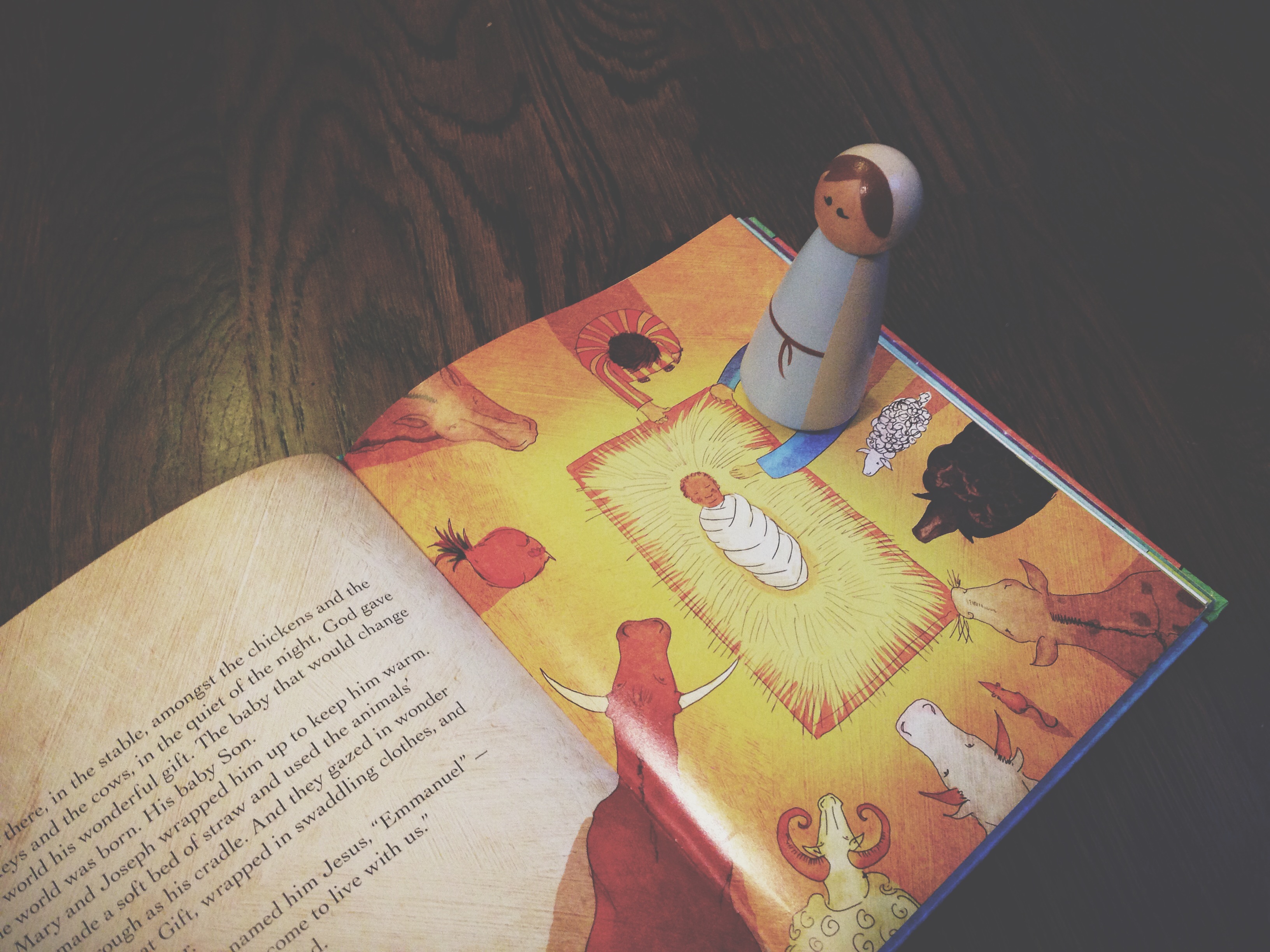
In our home we have a simple yet beautiful nativity set made of hand-painted wooden pegs. Although our (my? Anne probably had a better vision all along) initial intent was to create a nice little nativity display for our children to “look at but not touch,” you can probably imagine that these little wooden characters have quickly become one of the new favorite toys of the season, especially for our 2 1/2 year-old Alice.
To be honest, I was initially annoyed by finding shepherds under tables and Joseph in the bathroom, and Eleanor, our 10-month-old, could not keep the spherically-shaped sheep out of her mouth. And who knew how much angels loved talking to Thomas the Train?
At this point in the story I could talk about how I was eventually convicted by the metaphor for faith that was made painfully obvious to me yesterday: that we adults, we like to put the story of Jesus on a shelf, to “look at but not touch,” so that we are “reminded of God’s Truth” when we happen to glance over at the display from time to time. Children, however, are natural integrators of faith. They are all-in. The characters of Jesus’ story become regular players in their world, the story of Jesus is wrapped around and through the entire tapestry of their imagination. Why wouldn’t an angel talk to a train? “The Kingdom of Heaven belongs to such as these . . . ”
But that’s another post.
What I want to talk about this morning is what happened two nights ago, when the little wooden Baby Jesus could not be found. Anne and I were finishing a dinner conversation, and from the next room we could hear Alice walking around saying, “Baby Jesus, where are you?” A few minutes later we heard, “There you go, Mommy, there’s Baby Jesus.” And what we found in the adjacent room is pictured at the top of this post. Alice had searched and searched for the wooden Baby Jesus to no avail, so she found the picture of the manger scene in her Jesus Storybook Bible and placed Mary (Mommy) right on top of the two-dimensional Mary on the page, and positioned her looking directly at her baby.
At the time Anne and I thought this little act was incredibly cute and special and meaningful, but the true meaning didn’t well up within me until last night at church when Anne and I sang along with our congregation, “O Come Let Us Adore Him.”
Adoration. An often ethereal posture in my faith, I must confess. Sure, I love Jesus, but how often do I put myself in a posture of adoration? Do I come to adore Him, or to plead with Him, ask of Him, bargain with Him?
But Alice gets it. She knew that Mary needed to be adoring the Baby Jesus. And once she placed Mary in that posture, she left her alone. The wooden Mary sat on the book adoring the two-dimensional Baby Jesus the rest of the evening (until Eleanor came along). It’s as if Alice knew that Mary was now at peace. “There you go, Mommy. There’s Baby Jesus.”
Good friends, come! Let us adore Him!

We make the worst mistake in Christian education when we forget that Truth is a Person.
If we teach our students to learn from a purely objective point of view, to hold Truth (“knowledge”) at a distance, to study it in order to master it so that they can use it to get what they want out of life (good grades, good college, good job, good car, good retirement), then why do we act surprised when our students regard Jesus in the same transactional, utilitarian manner?
If our aim is to inform rather than to transform, we will graduate moralists rather than Kingdom bearers, prisoners rather than free men.

[7:00 a.m. Monday morning. Weekly Bible study with my six 8th-grade boys. A dozen Dunkin Donuts already consumed.]
Me: “I want to spend our time this morning reflecting on one short text from the first chapter of James: ‘Count it all joy, my brothers, when you meet trials of various kinds, for you know that the testing of your faith produces steadfastness. And let steadfastness have its full effect, that you may be perfect and complete, lacking in nothing.‘ Thoughts?
<At least 60 seconds of silence – you know, of the uncomfortable sort>
8th grade boy: “All of us are lacking.”
Thank you, Holy Spirit.
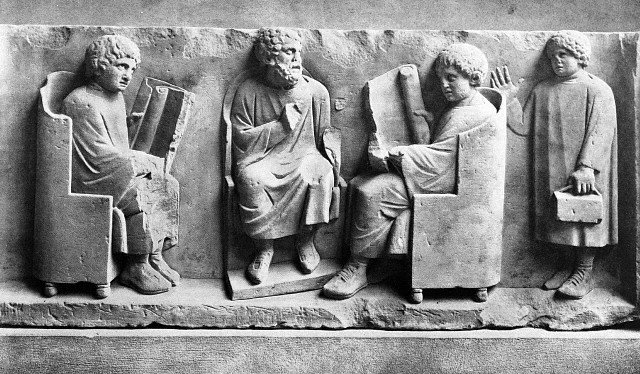
“It is no surprise that our dominant images of teaching and learning are individualistic and competitive rather than communal; they are derived from images of reality and of knowing that bear these same marks. If reality consists of atoms in the void or individuals in competition, and if knowing consists of gathering discrete data about objects, then teaching and learning will mean delivering data to students who must compete for those scarce rewards called grades. But what scholars now say–and what good teachers have always known–is that real learning does not happen until students are brought into relationship with the teacher, with each other, and with the subject. We cannot learn deeply and well until a community of learning is created in the classroom.”
– Parker Palmer, To Know as We Are Known: Education as a Spiritual Journey
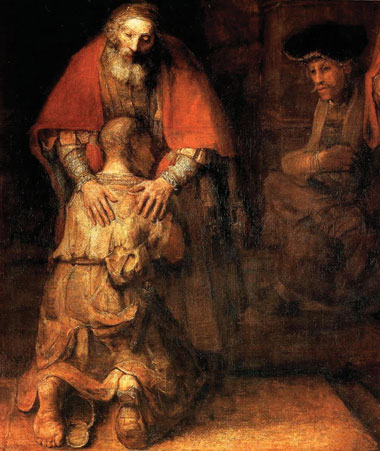
“Why is it that it is often easier for us to confess our sins to God than to a brother? God is holy and sinless, He is a just judge of evil and the enemy of all disobedience. But a brother is sinful as we are. He knows from his own experience the dark night of secret sin. Why should we not find it easier to go to a brother than to the holy God? But if we do, we must ask ourselves whether we have not often been deceiving ourselves with our confession of sin to God, whether we have not rather been confessing our sins to ourselves and also granting ourselves absolution . . . Who can give us the certainty that, in the confession and the forgiveness of our sins, we are not dealing with ourselves but with the living God? God gives us this certainty through our brother. Our brother breaks the circle of self-deception. A man who confesses his sins in the presence of a brother knows that he is no longer alone with himself; he experiences the presence of God in the reality of the other person.”
– Bonhoeffer, Life Together: The Classic Exploration of Faith in Community
 Pi Alpha